We flew for 12 hours, but I feel like we’ve come to a different planet….
We begin to settle in. We’ve been here for almost two weeks now and the apartment feels like home. We are at least getting used to its quirks. We meet some of our neighbours. The magician who lives on the other half of the ground floor with his girlfriend and a dog and a cat. Another neighbour introduces himself, while his dog, Alvarito, turns circles and tugs at his lead. Alvarito was found abandoned in the local park, but ‘look at me now’, he seems to laugh as his tongue lolls.
For the first few days we explore San Telmo. Like the apartment, this barrio has seen better days. Once classy and fashionable, it’s now down at heel, teetering on the edge of gentrification, but for the moment, still on the wrong side of the tracks. It’s the oldest area of the city, and there are many buildings like ours, with carved facades, antique shutters, crests and cartouches, balconies and wrought-iron balustrades. Some painted brightly, some stripped back to bare brick, some cracked and crumbling. We like these ‘faded glory’ kind of places, that hint at stories to be discovered and secrets to be uncovered.
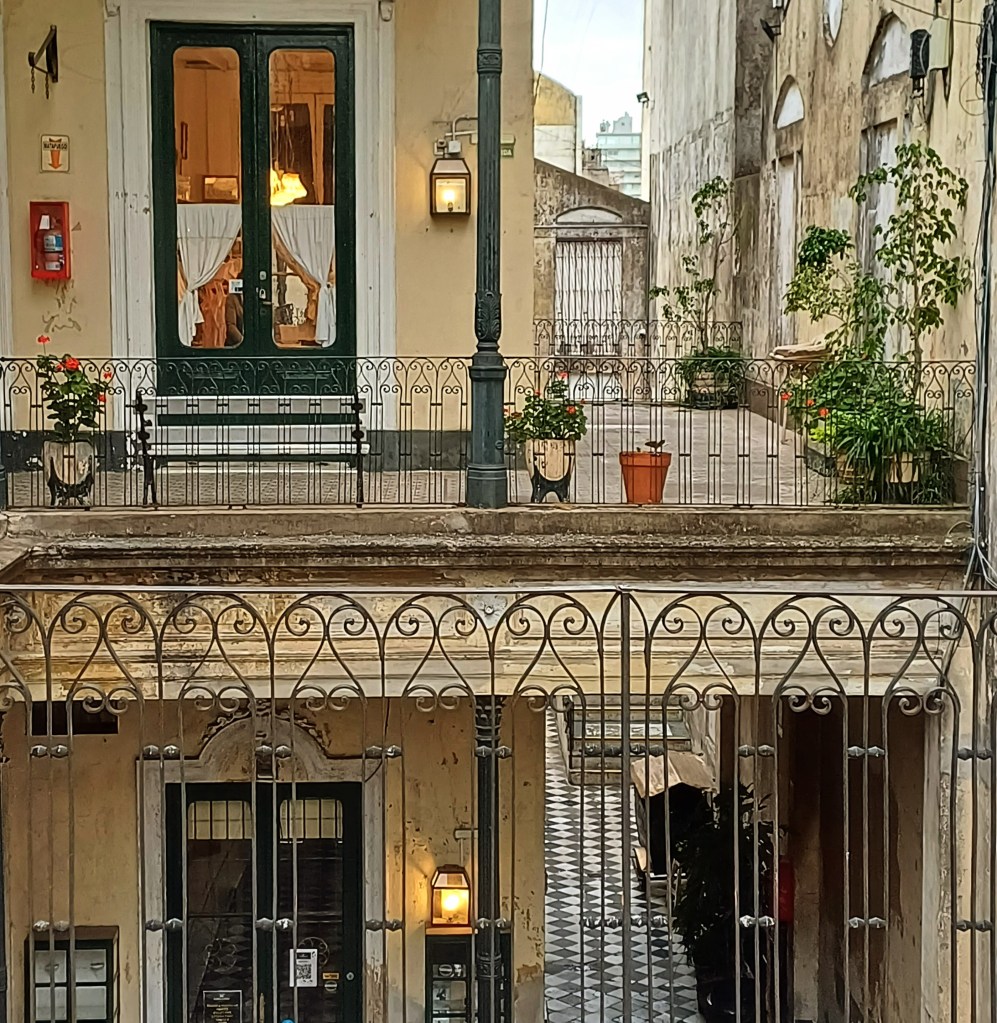
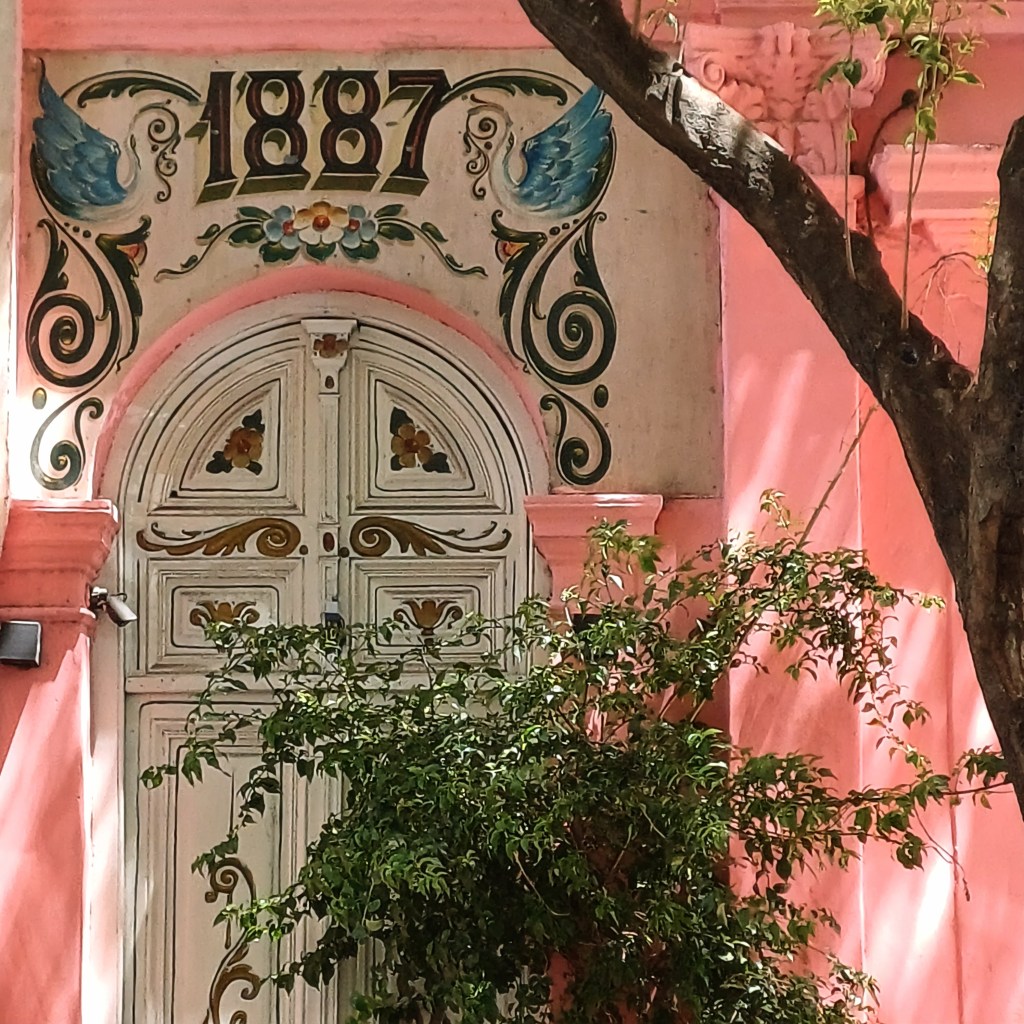

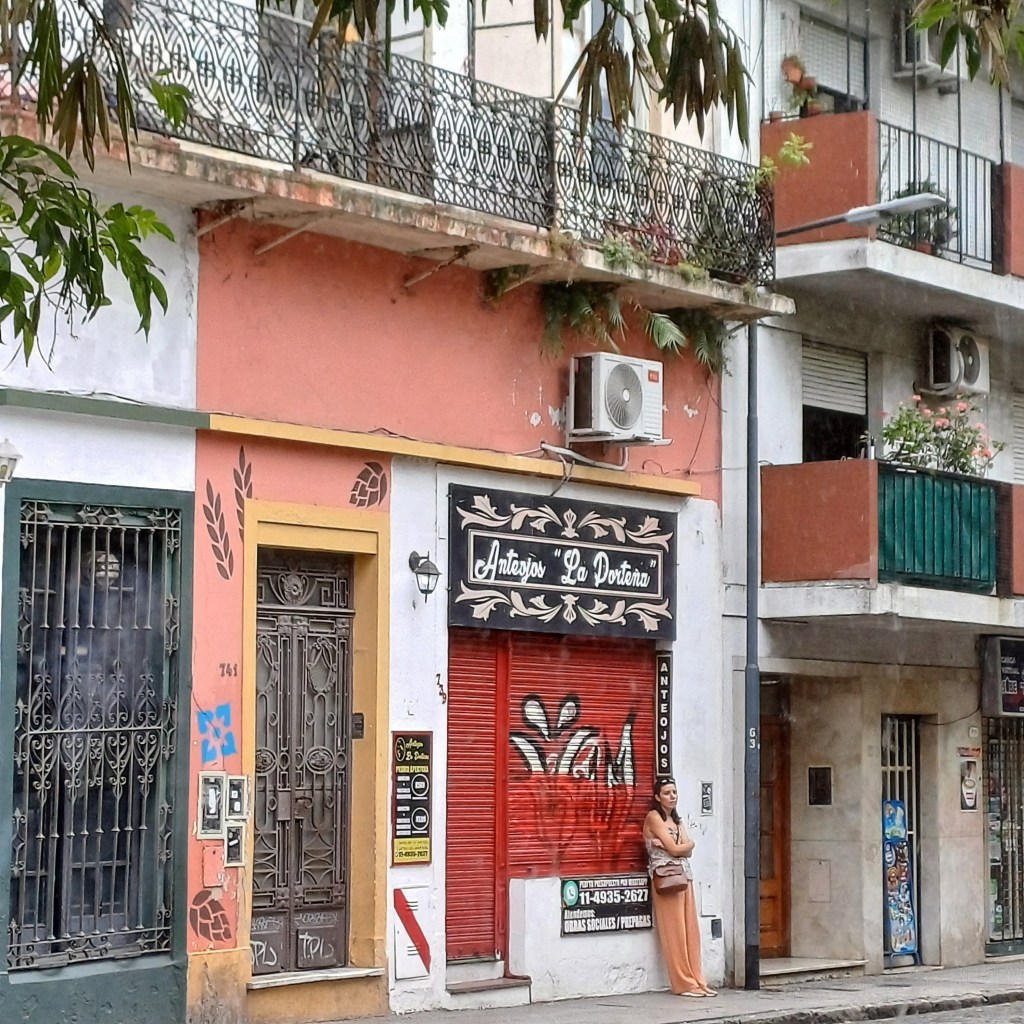
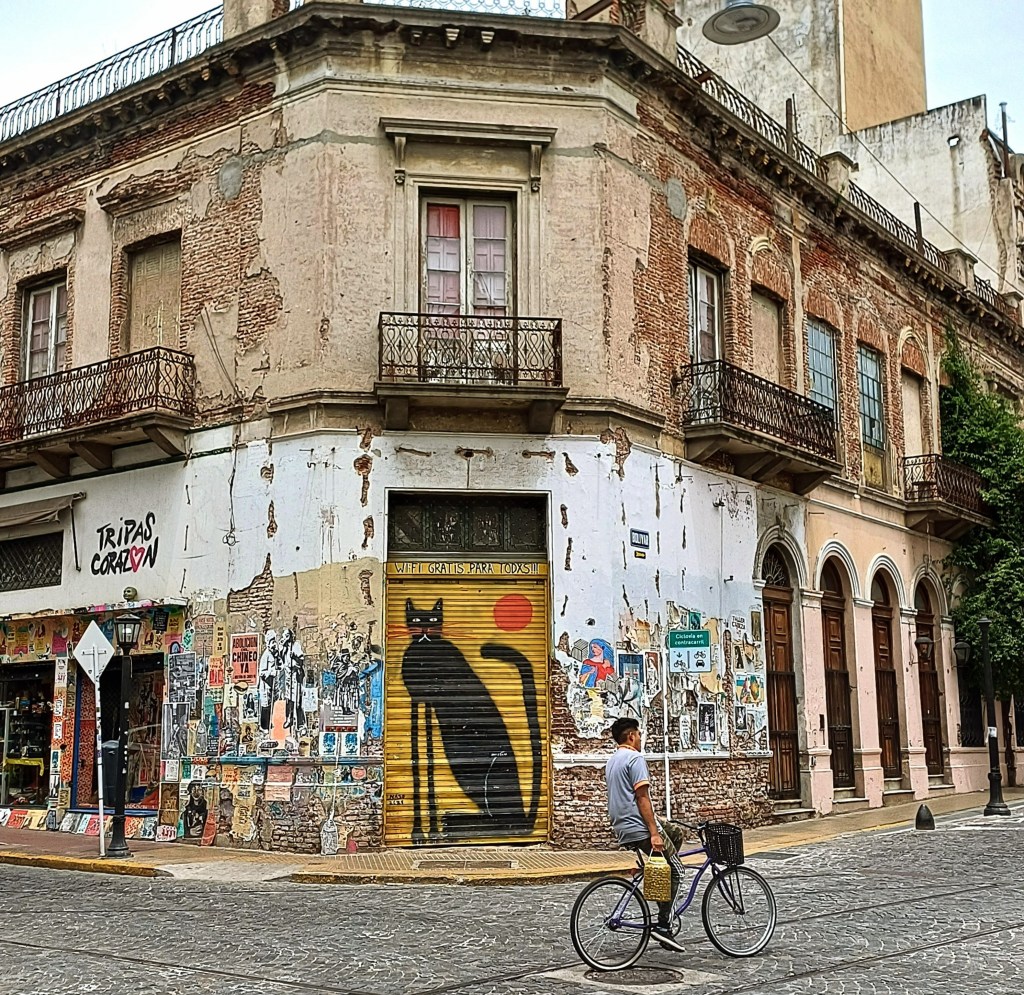
We walk on cobblestones, past giant rubbish containers, their contents strewn over the streets by the cartoneros*. Broken glass, rotten food, cardboard, discarded clothing and odds and ends. It’s not pretty. Dog shit litters the pavements. But it has ‘a feel’. An edge. Never threatening. Even so our host messages us: ‘Please do not walk south of Parque Lezama and west of Calle Peru when it’s dark. Just a precaution’. We jokingly refer to this as the ‘no-go zone’. But we pay heed.
All roads lead to Rome, and in San Telmo, all calles lead to Plaza Dorrego, the city’s second-oldest plaza. It was originally a stop for caravans bringing supplies into the city from around the country. Six days of the week it’s quiet and lovely** and it’s surrounding cafes set out tables and (rather uncomfortable) director’s chairs and parasols. We go there for cafe con leche and medialunas (mini, sticky, sweet croissant-like pastries) in the morning. And at any time of the day to while away a few hours. One of the waitresses refers to us as ‘mi amor’. We love the old buildings, and the people-watching; helmet-clad tourists roll up on bike-tours and hippy artisans set out their wares on a handful of stalls. There are always dogs; and a handful of homeless men, who sit on the low walls that surround the edge, watching like us.
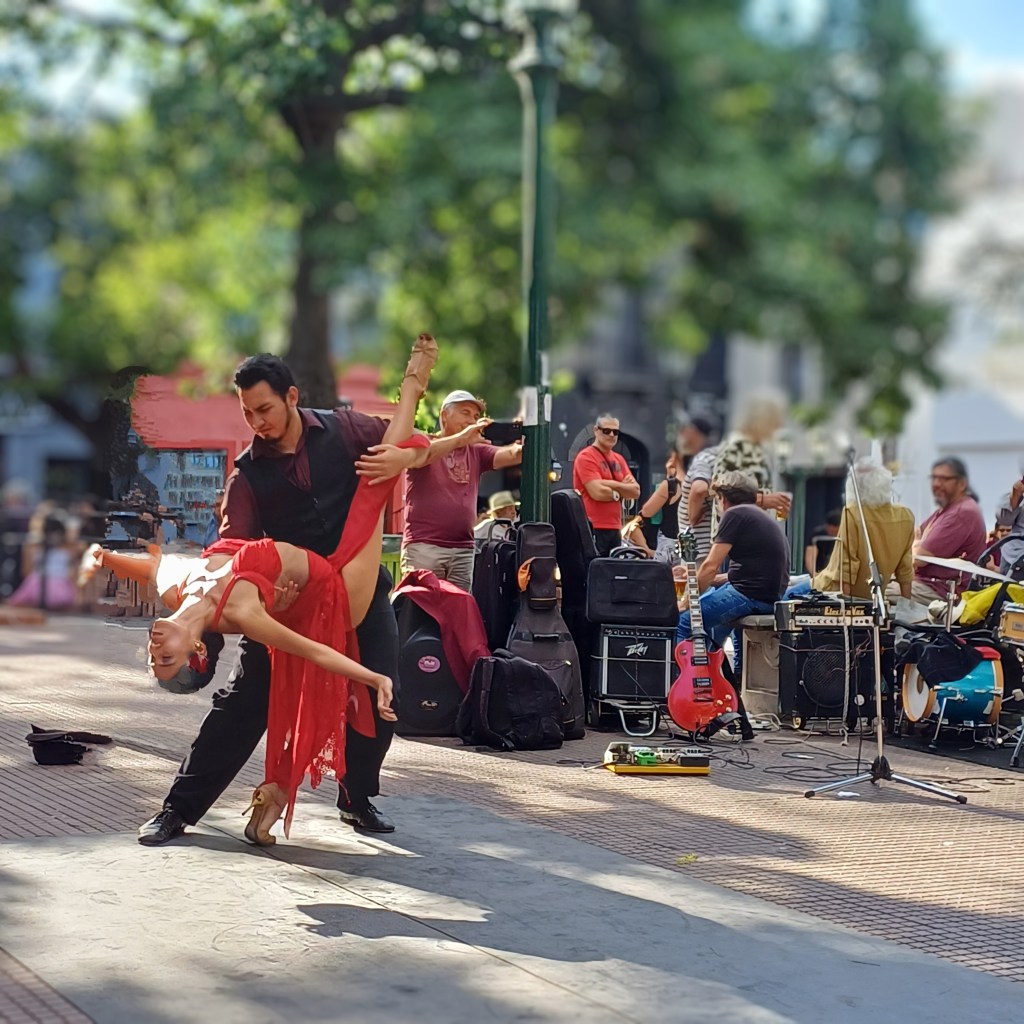
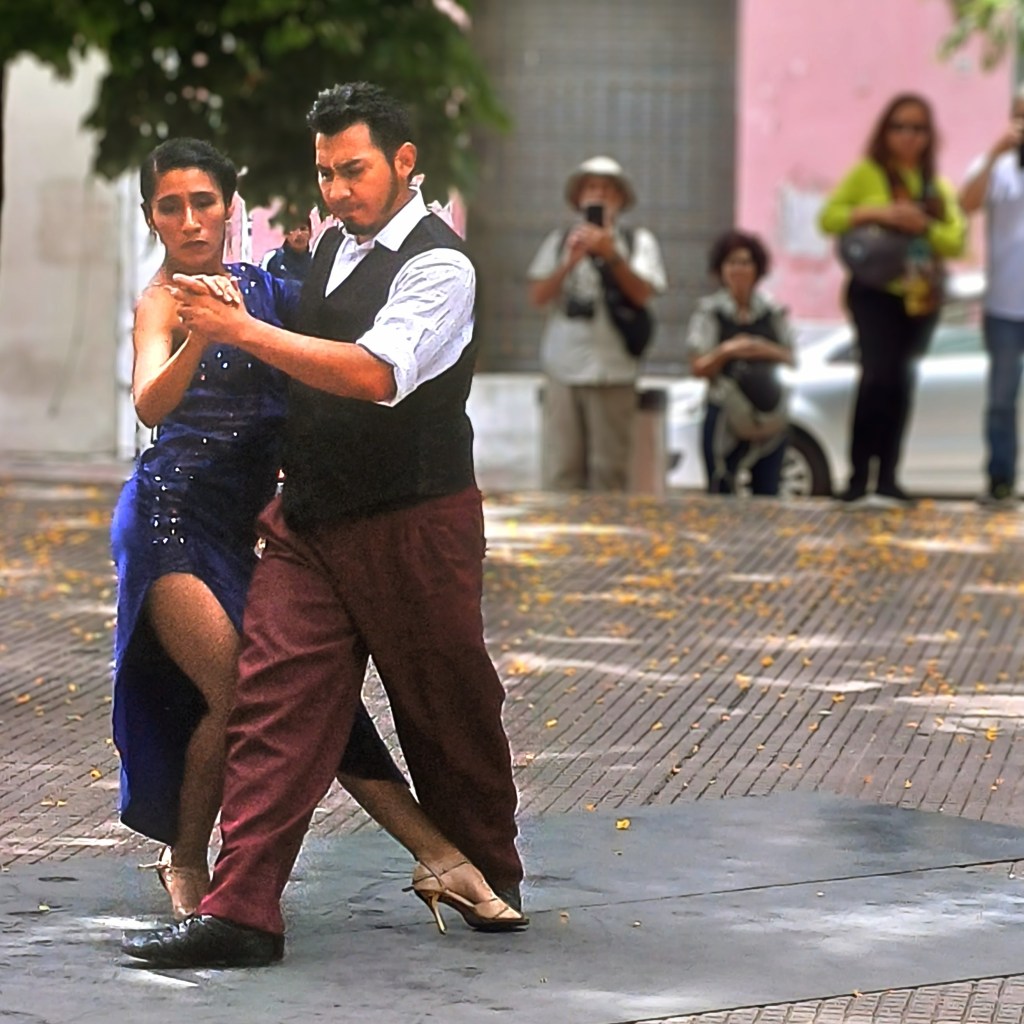
There are often tango dancers. The tanguero arrives with a rolled up dance floor and a large speaker. The tanguera applies her make-up, she might add slides to her hair, or moisturizer to her legs, and finally she straps on her tango shoes. The transformation can be startling. One young girl turned siren while we watched. Backless red dress, slashed to the thigh, sequins, and killer heels, and at the end of every set she put her glasses back on. ‘It’s like watching Clark Kent’, mumbled Jim. The music is evocative, melancholy, mesmerising. On Sunday evenings, locals dance in a corner of the square at the open-air milonga. It’s casual, totally captivating. Dancing purely for the joy of dancing.

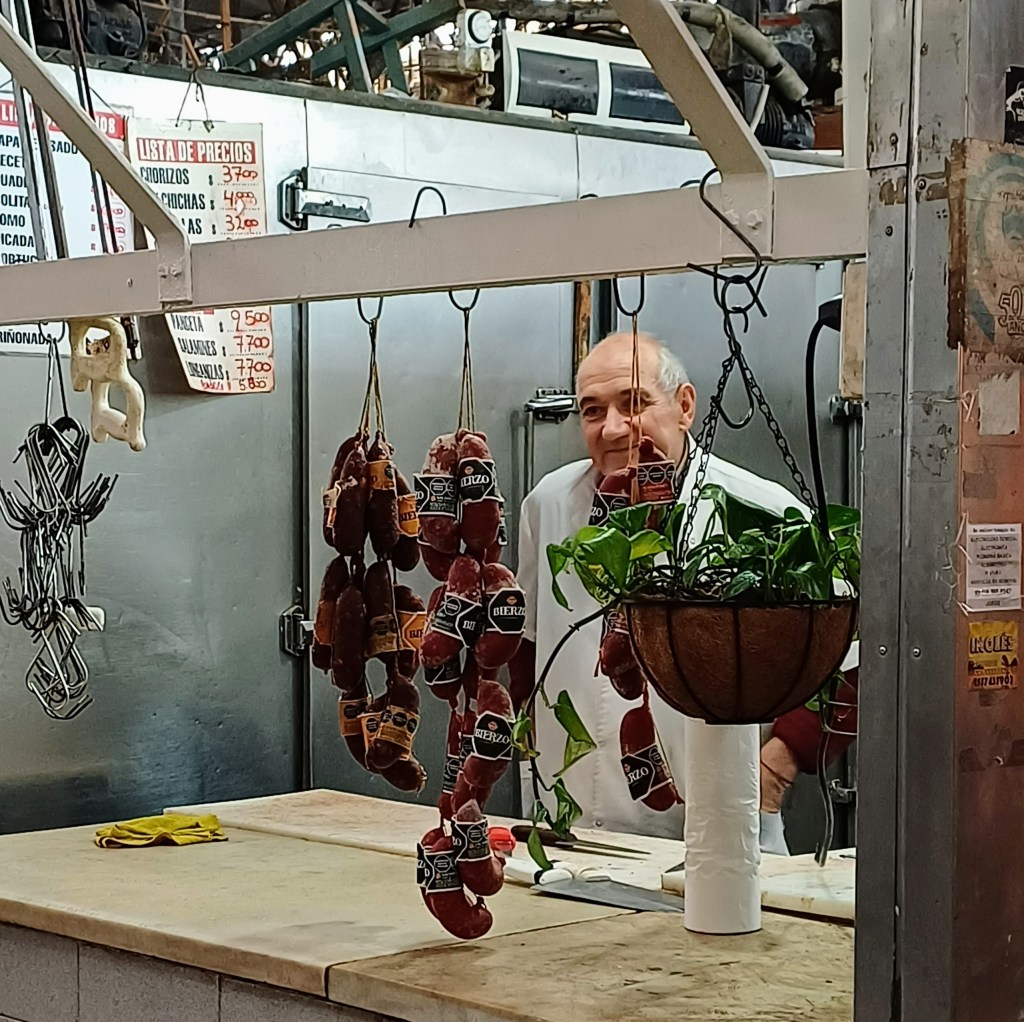
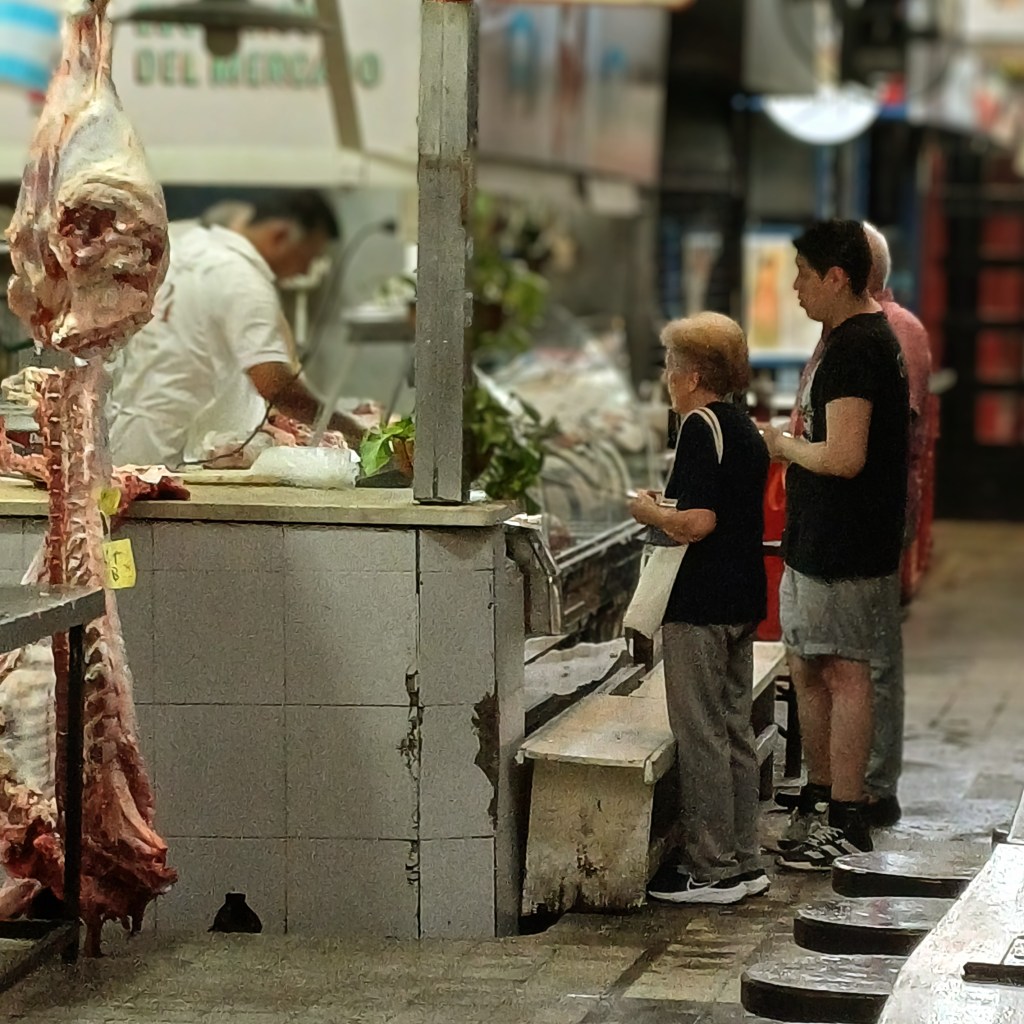
We discover the market with it’s beautiful wrought-iron interior. More food-court than market really. But one morning I popped in early on my way to my tango lesson and had a glimpse of the past. Nothing was open except for a couple of butcher stalls, where a man with a blood-stained apron sawed the side of a cow into manageable chunks and locals queued for their meat-fix.
And Lezama park. The same one where Alvarito was found. Thought to be the site of Buenos Aries’ first founding in 1536. A prominent statue of the Spaniard Pedro de Mendoza stands at the entrance. It’s shady and green and people sit on benches and read books while drinking mate (traditional Argentine tea). Young couples smooch, and old men play chess with the Russian Orthodox Church as a backdrop.

Best of all, we discover Walrus books. A second-hand English book shop. The owner makes a list for me when I ask him about Argentine authors, and I come away with a copy of Borges’s ‘The Book of Sand’ and the rather more lurid ‘Kiss & Tango’ by Marina Palmer. My Buenos Aires education begins.
* Cartoneros – cardboard collectors who rummage through rubbish containers looking for anything they can sell to recycling companies.
** On the seventh day the feria or antiques market takes place.
Practical Stuff.
The best things we’ve found in San Telmo:
Food
El Refuerzo Bar Almacen. Chacabuco 872. Good, inexpensive food, especially if you choose from the menumediadia.
Cafe Rivas. Estados Unidos 302. Fabulous salad with caramelised pear and blue cheese. Great wine and friendly service.
La Posta del Horno. Defensa 1290. There’s also a stall in the market. The best empanadas ever! And great chips. And it’s cheap as chips.
Tio Felipe. Balcarce 739. Very thin crust pizza. Not easy to find here. An old fashioned, no-frills place, small terrace out front.
Lo del Cafe Frances Bistro. Av San Juan 500. Lovely atmosphere. Good food and service.
Caseros. Av Caseros 486. Beautiful place on what is perhaps the nicest street in San Telmo. Has a Michelin Bib gourmand. Very good value if you go for the set lunch menu.
Cafe Hiro. Estados Unidos 756. Good coffee and great pain au chocolat.
Music.
Je suis Lecan. Belcarce 749. Great live sessions. Sometimes a cover charge is asked for the musicians, sometimes it’s free entrance. Also a restaurant.
Pista Urbana. Chacabuco 874. Also serves food, small dishes, snacks.
Books/Shopping.
Walrus Books. Estados Unidos 617. A fantastic selection of books and you can trade your good-quality books.
El Patio De Cabo Verde. Balcarce 1053. Artisan workshops and galleries. Renovated old-style patio living quarters. (Like Pasaje De La Defensa – but less touristy).
 Wondering Woman
It all sounds wonderful and like your lived there for years! Love the photos. ❤️🌈🎶
LikeLike
Now, 6 weeks in, it feels like we’ve been here for years!
LikeLike
Wow Tracey, how fascinating! Terrific photos and great eating! Val
LikeLike
It is very ‘other’ and yet there are lots of familiar things. Last night we had curry at the Mash British Curry House!
LikeLike
Hi Tracey. What a world. A magician for a neighbour, dancing in the streets and dark alleyways to steer clear of. In contrast we have come back to where we used to live in Wales to visit for a few weeks. Familiar, safe as long as wind doesn’t blow tiles off roof. They say you should never go back, which isn’t quite fair, but nonetheless I envy you your different world. And I love sharing it through your blog.
MJ
LikeLike
I think that ‘never go back’ idea is such a bad one. Going back, means peeling back the layers, onion-like and finding treasures. Hope that’s what you’re getting in Wales. And no blown off tiles!
LikeLike
I am glad that you are settling in. I was in Buenos Aires for the best part of a week four years ago and easily succombed to its charms. I loved San Telmo. I loved the cobble stones, the aged houses, and I hope that it stays un-gentrified for a little while longer. I visited the city for the football, taking in three games. Living so close, you have to go to Boca. It’s a must. Vamos Boca!
LikeLike
Ha ha. Thanks Chris, but I’d rather watch tango!
LikeLiked by 1 person
What a fascinating trip
LikeLike
Keep reading Sheree!
LikeLiked by 1 person
I shall
LikeLike
I just love how the meat is out there up and close with the customers. Health and Safety would have a field day. Though having said that, we got used to it in places like Turkey and Portugal. A wonderfully descriptive imagery of your new temporary lifestyle. Enjoyed the images, thanks Tracy.
LikeLike
There are lots of things Health and Safety wouldn’t like here!
LikeLike
Oh I do love your descriptions. I was there in all your wanderings and discoveries right along with you. Lovely to see BA through your eyes.
Alison
LikeLike
Thanks Alison! I also loved reading your BA stories. It’s great to see something from someone else’s point of view, and it always add a little extra something if you’ve got your own experience to compare it to.
LikeLiked by 1 person
wonderful photos and you really give the feeling of being in this amazing city through the post and pics. nice work!
LikeLike
Thanks Andy, it is a pretty amazing place.
LikeLike