Half way through our stay, we wanted to ditch the guidebook and do our own thing.
The barrio of Barracas isn’t mentioned in the Lonely Planet – isn’t on the tourist radar at all, as far as I can tell, which seemed good enough reason to go for a walk there and to go with the flow.
Once a wealthy barrio, Barracas was hit by the Yellow Fever epidemic that decimated the city in 1871. It’s wealthy residents fled north and their empty homes were taken over by immigrants. Barracas became and remains a working-class area.
We started at the church with a story. A huge Gothic edifice, Iglesia Santa Felicitas.
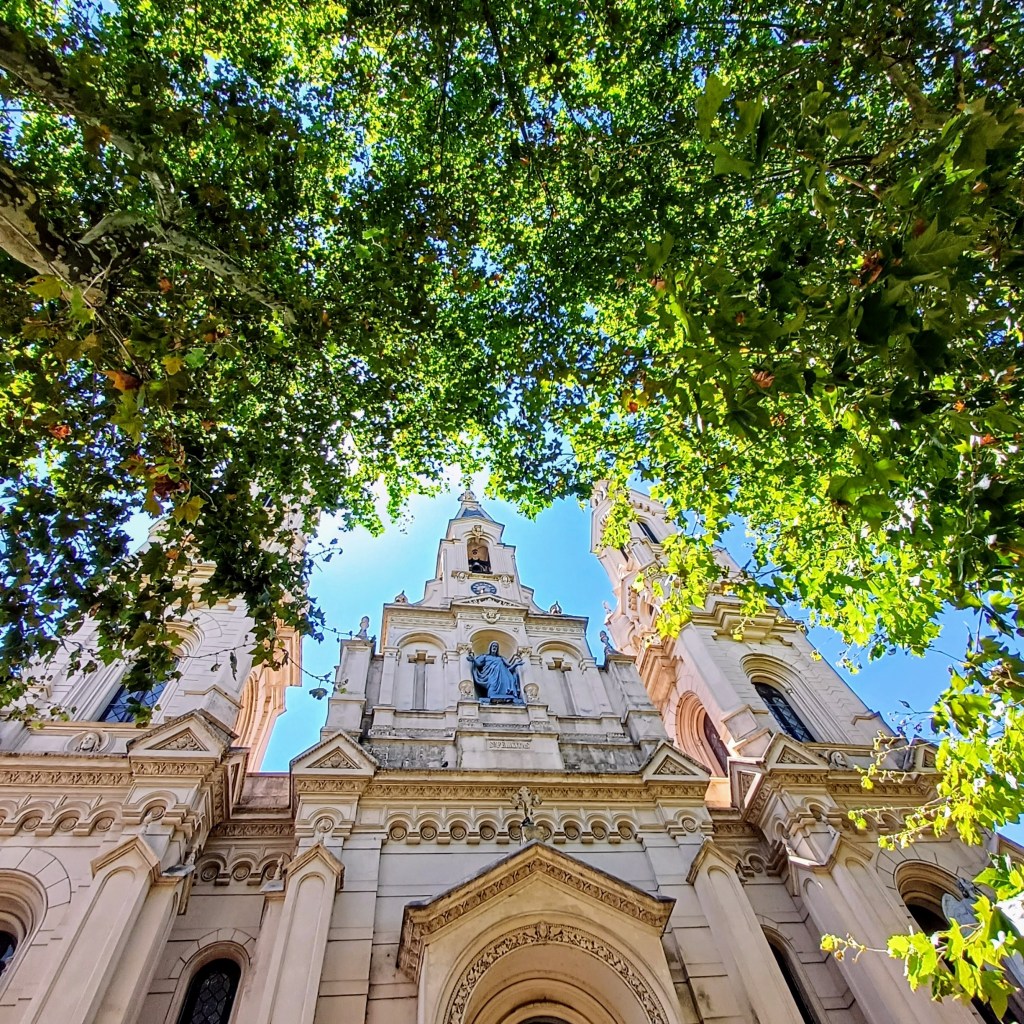
Felicitas, the oldest daughter of wealthy parents, was forced at the age of 15 to marry a much older man, snubbing a suitor (some say, lover) in the process. Her six-year old son died in the Yellow Fever outbreak, and her husband followed shortly afterwards. Still only 26, but now a beautiful and wealthy widow, Felicitas was much sought after. Her original beau thought his time had come, but was rejected again. On the day of Felicitas’s engagement, he asked to speak with her at her home, then shot her and himself. Both were buried on the same day in Recoleta Cemetery. Some believe Felicitas haunts the cemetery, distraught at being buried in the proximity of her murderer. Others claim she haunts the church, and white handkerchiefs left tied to the railings can be found the next day soaked with her tears.
High drama! We needed to sit down, and as we always begin a walk with a coffee stop, we headed across Plaza Columbia (the site of Felicitas’s former home) to Cafe Martinez. ’90 years of shared stories and we are going for more’ proclaimed the window sign. That’s my idea of a cafe, the store-cupboard of a community, a magpie-like collection of bits and bobs of local history and tales, a place for people to congregate and chat. The girl on the counter seemed unaware of the widow sign and could not even summon a smile; still the medialunas were good and the coffee hot, and we people-watched for a while. Content.
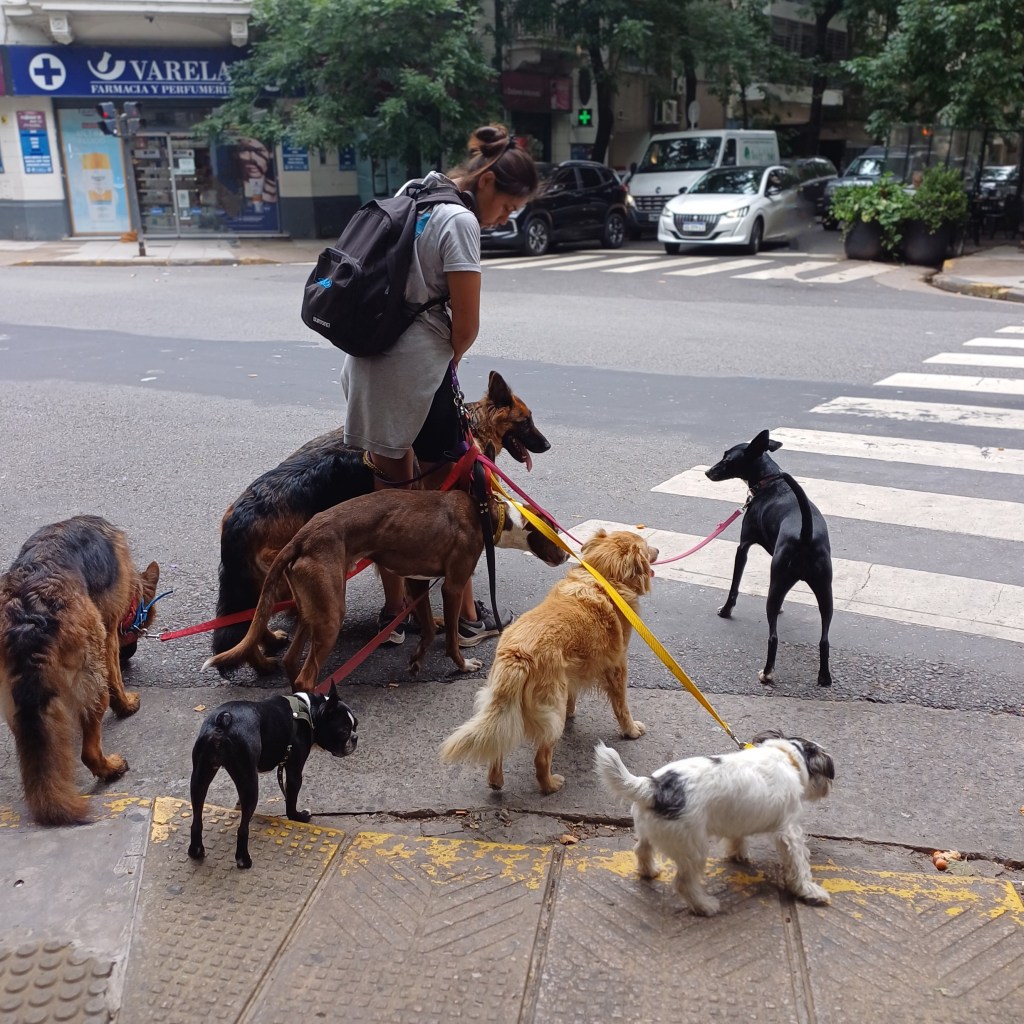
‘So far, I like this walk’, said Jim, munching on his medialuna. People queued for buses, a policeman parked his quad-bike in front of us, and a couple of dog-walkers passed, clutching a fistful of leads, trailing dogs, large and small, like the Pied Piper. Dog walkers are a bit of a thing in Buenos Aires, it’s not uncommon for them to walk ten or twelve dogs each.
Eventually, we started our walk for real. Down streets where a handful of nineteenth-century buildings jostled for space with high-rise living blocks. And then we hit Passage Lanin, where ordinary houses have become works of art. Calle Lanin itself was dug up. Huge cobblestones (they are a bit like icebergs when you see them unearthed) lay in heaps and it was a mass of sand and rubble. Even so, I could not stop the smile spreading over my face. A workman snoozed in his digger and his muchachos sat in the shadow at the end of the street. I ignored the mess and concentrated on the colour. Local artist Marino Santa Maria decorated his own studio with mosaic tiles in 1990. His neighbours liked it so much they asked him to transform their own homes and they did it together, each one different, each an expression of the people living inside. The city government got on board, and the Museo de Bellas Artes and Unesco, and eventually 35 houses over two blocks were a riot of stripes, wavy lines and wobbly dots. Yellow and royal blue, orange and pink, turquoise, bottle-green and burgundy, all mingling with the natural colours of sky and trees. It was a riot and I was on a natural high.
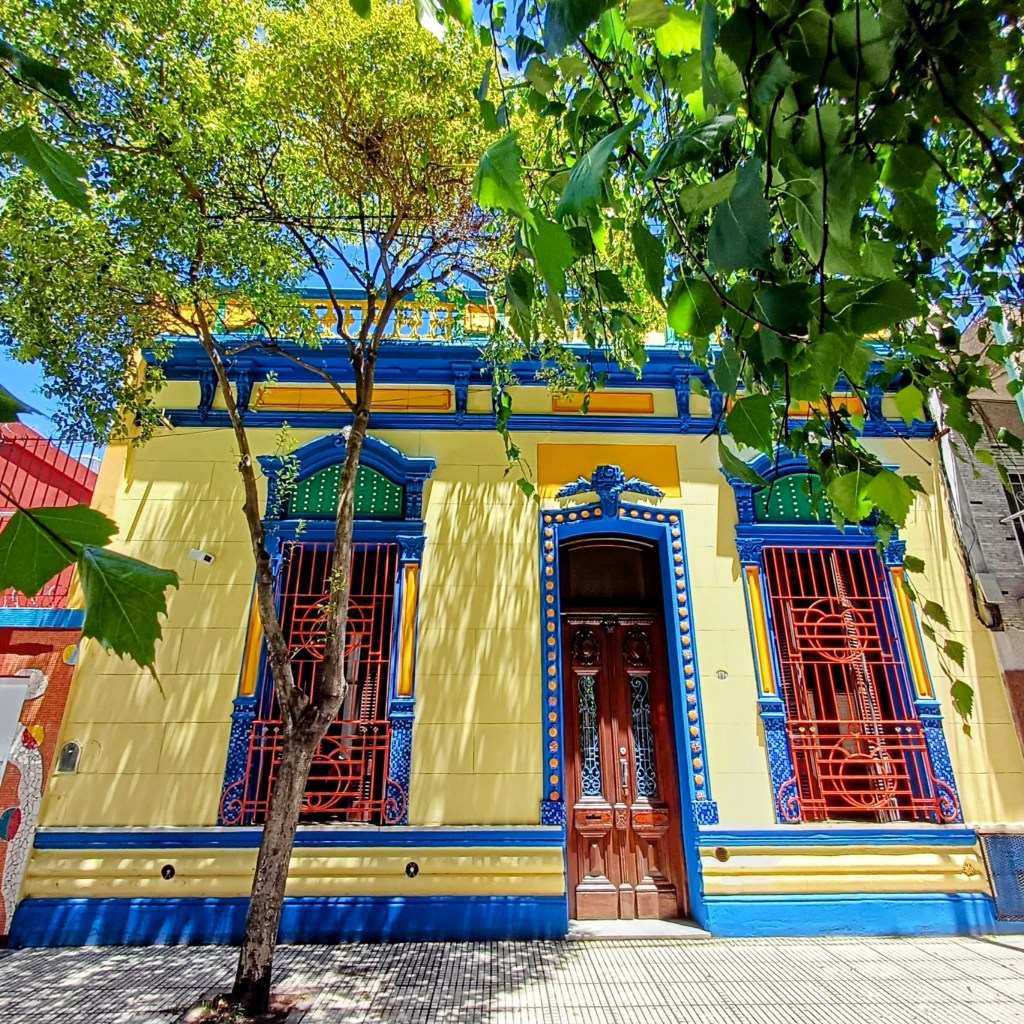
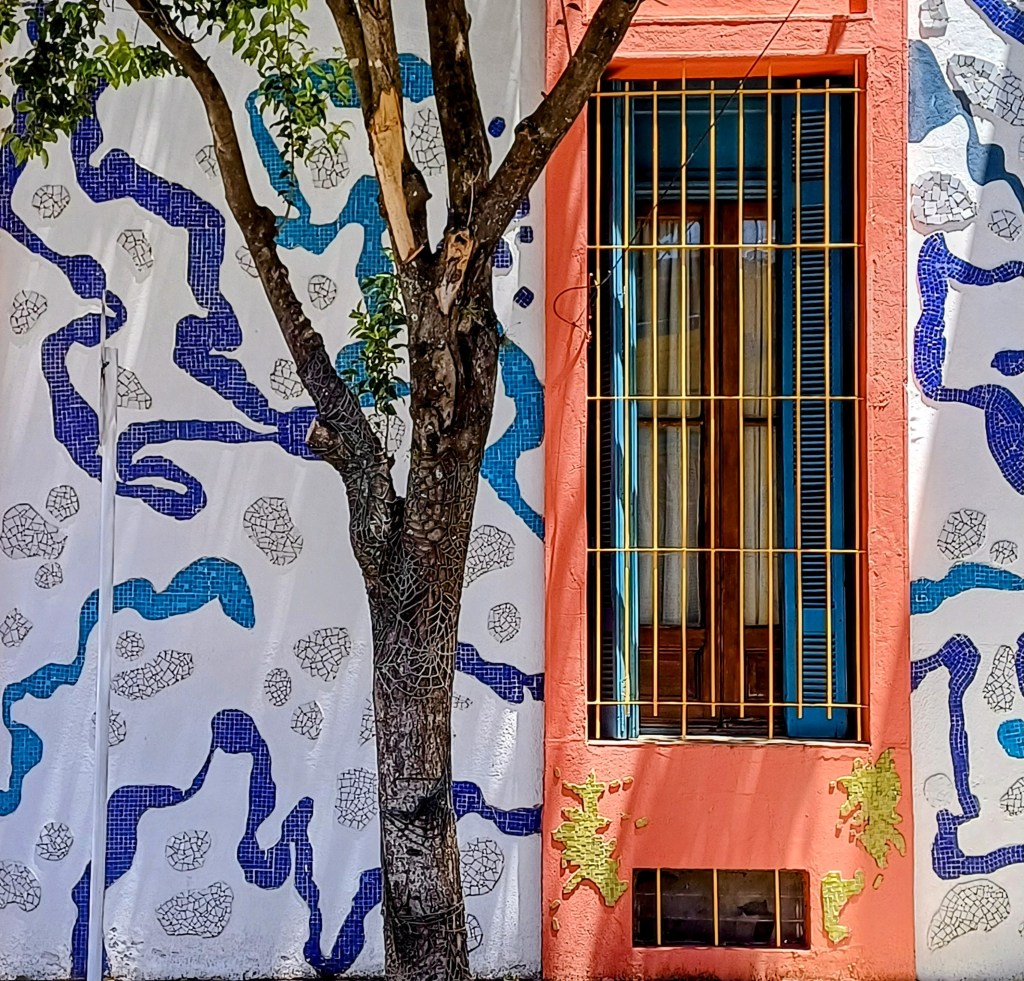
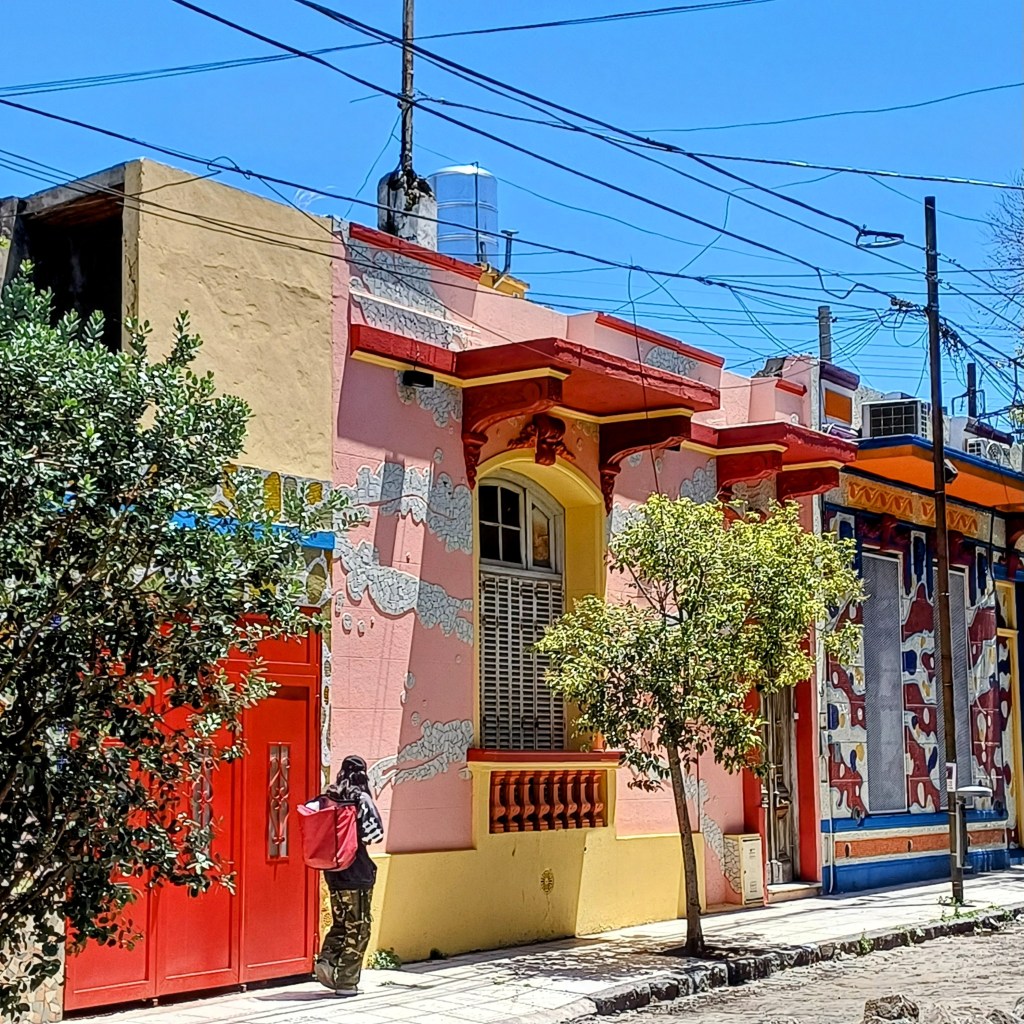

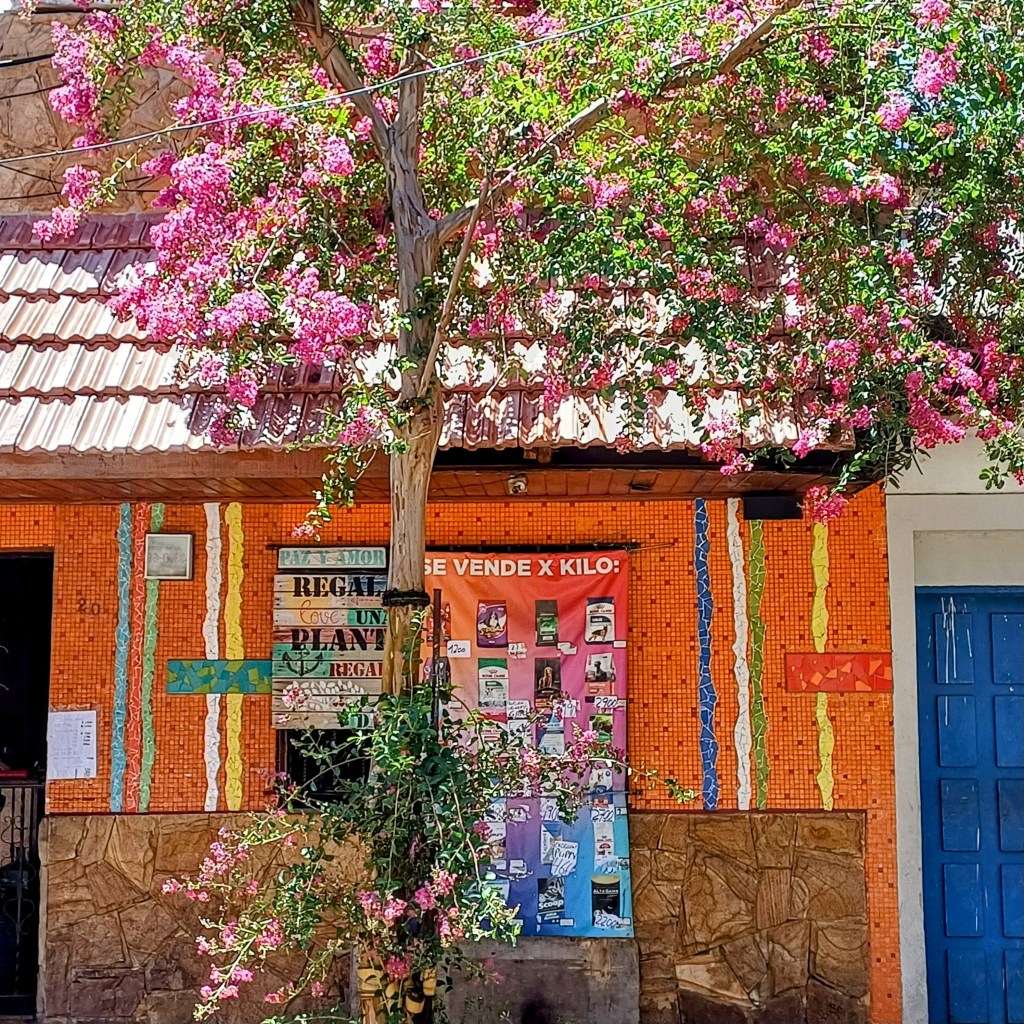
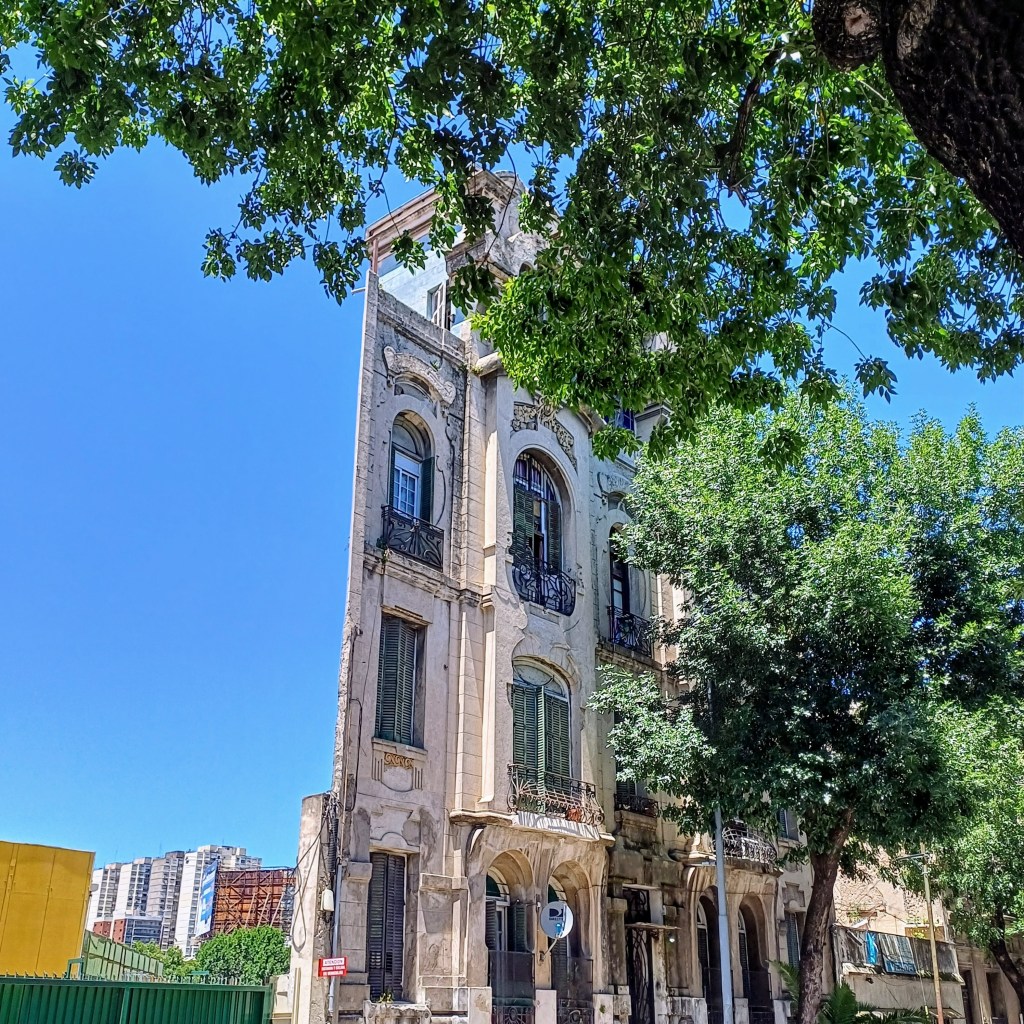
On we went past a ‘now you see it, now you don’t’ art-nouveau facade, along shady, tree-lined streets until we came to a classic corner-cafe, La Flor de Barracas, one of the Notables.
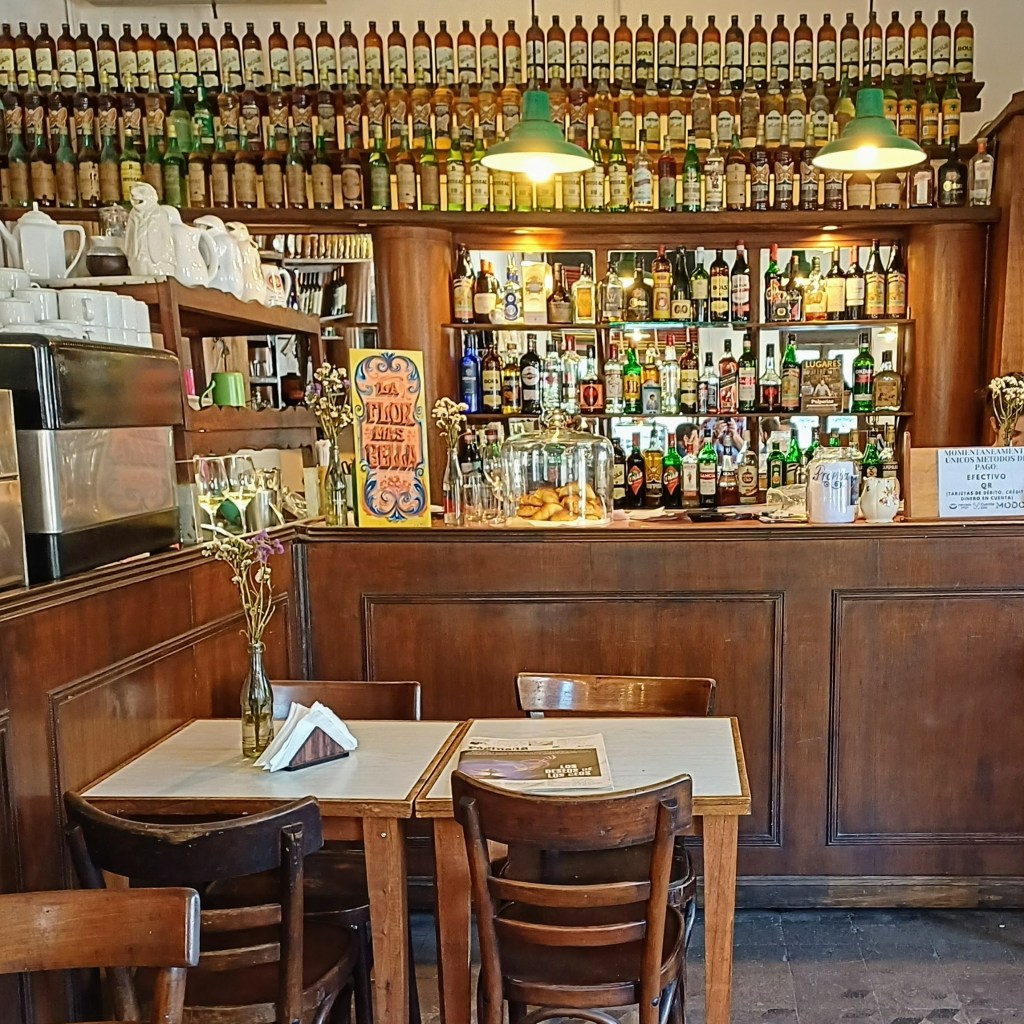
Time for lunch. We headed over the worn black-and-white floor tiles to the sash window in the corner and went back to 1906. Back then La Flor was known as the Fonda Genoa (the Genovese Tavern) and was opposite the railway repair yard which attracted casual labourers and various ‘characters’, and the area was known for knife fights. Now neatly attired work-colleagues sat at a long table, and behind them, two workmen shed dust with every movement. All were sharing great wooden boards of meat, draped with lacy fried eggs and surrounded by chips. I chose a salad and home-made lemonade and Jim went for gnocchi which melted into it’s cheese sauce and was almost soup-like. We looked at the shelves behind the L-shaped wooden bar heaving with old bottles, milk-jugs doubling as flower vases, and the odd assortment of antiques in the patio. We imagined tango-dancers tripping the light fantastic over those tiles. And we lingered. Barracas was really turning up trumps.
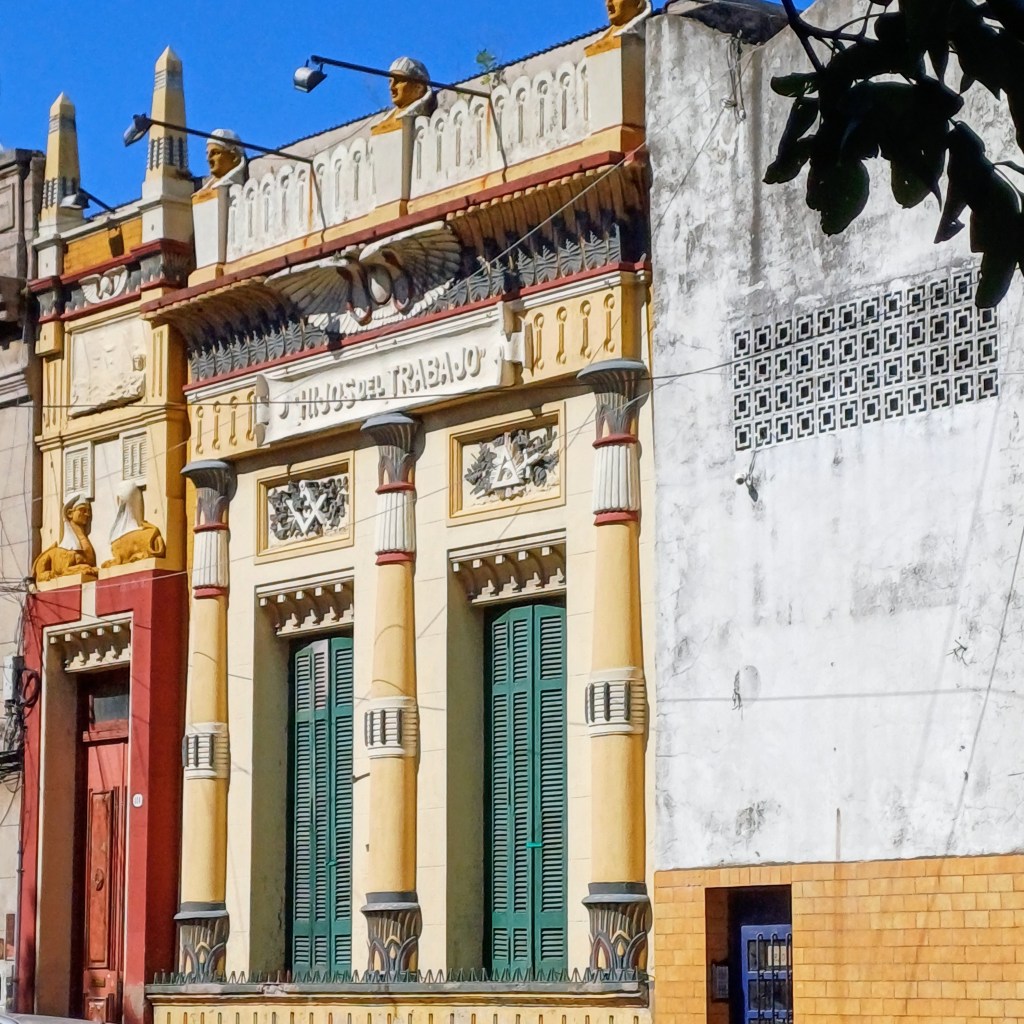
We carried on past the Monsenor Espinosa Neighbourhood, picture-postcard, leafy, green, with housing designed for workers, past a Masonic Temple (founded mainly by Italian and Spanish immigrant workers), past the Hipolito Yrigoyen railway station and onto our last stop, another Notable, the Bar El Progresso.
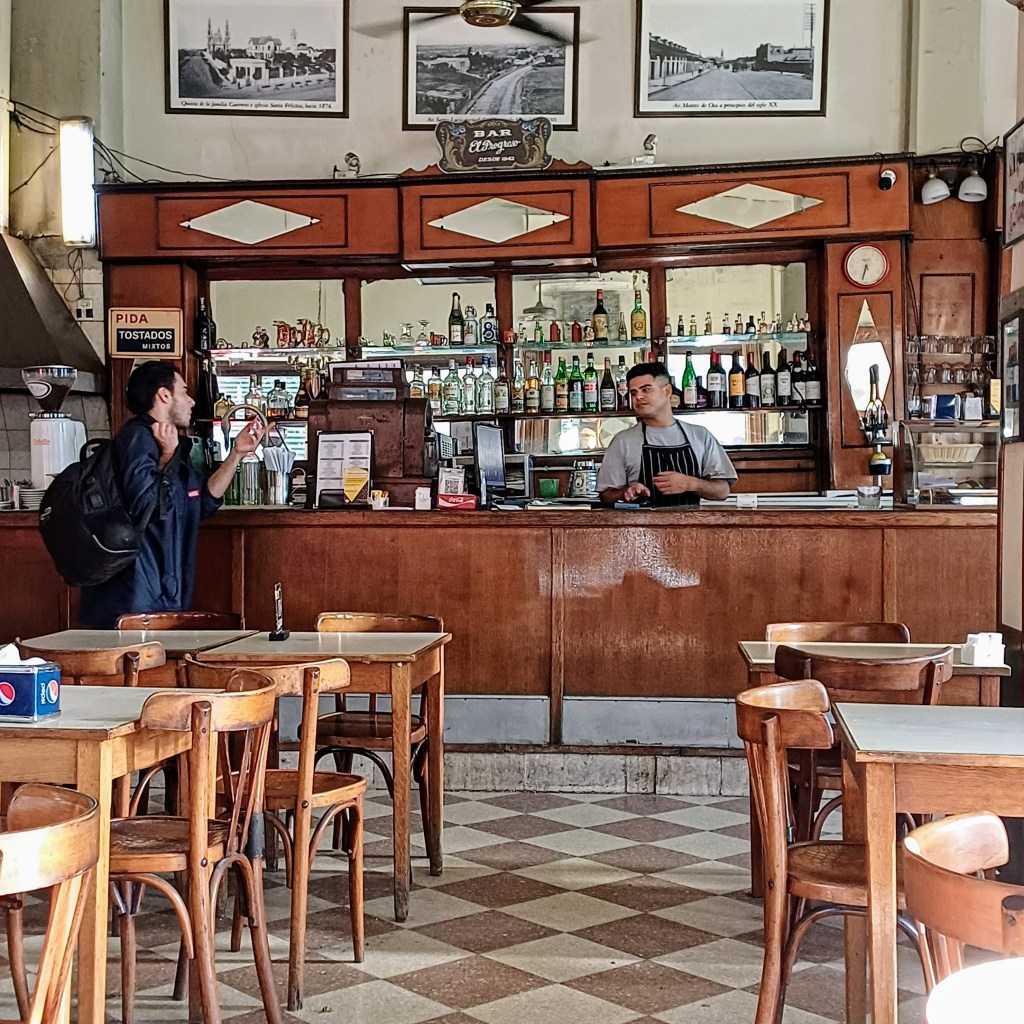
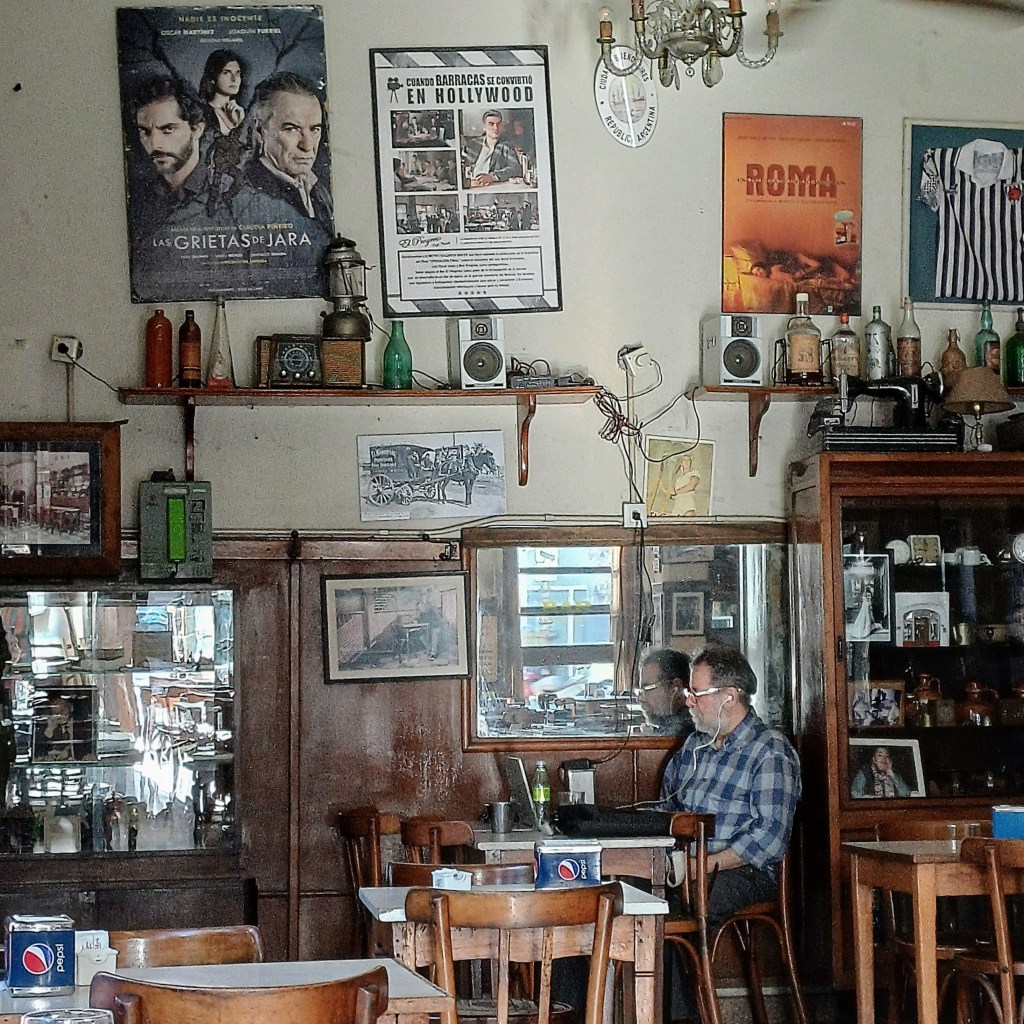
I loved El Progresso. A smattering of people of all ages. A family with a little boy playing with model cars and airplanes on the table. An old man and a young woman huddled over computers. A couple of loners nursing a cup of coffee. Others engaged in chat. The owner came over to talk to us. ‘Where are you from?’, he asked. ‘Oh a Dutch couple came in here once, about two years ago’, he said, when we told him ‘Amsterdam’. He took Jim by the arm, to explain the photos above the bar, showing the development of the main street from the late 1800s to 1970. ‘I don’t buy them. People give them to me’ he said. I was in that community store-cupboard. A place where time was circular, moving but always coming back to a resting point, not marching on relentlessly.
We ate great door-stop wedges of sandwiches on fluffy white bread. Jim had the Cheese Special. ‘What is the Cheese Special?’, we asked. ‘Just cheese’, said the waiter. No frills. No pretension. A genuine touch. ‘Thank you for coming to Barracas’, the owner told us, ‘most tourists don’t come here’.
I’m kind of glad, but I think they’re missing a treat.
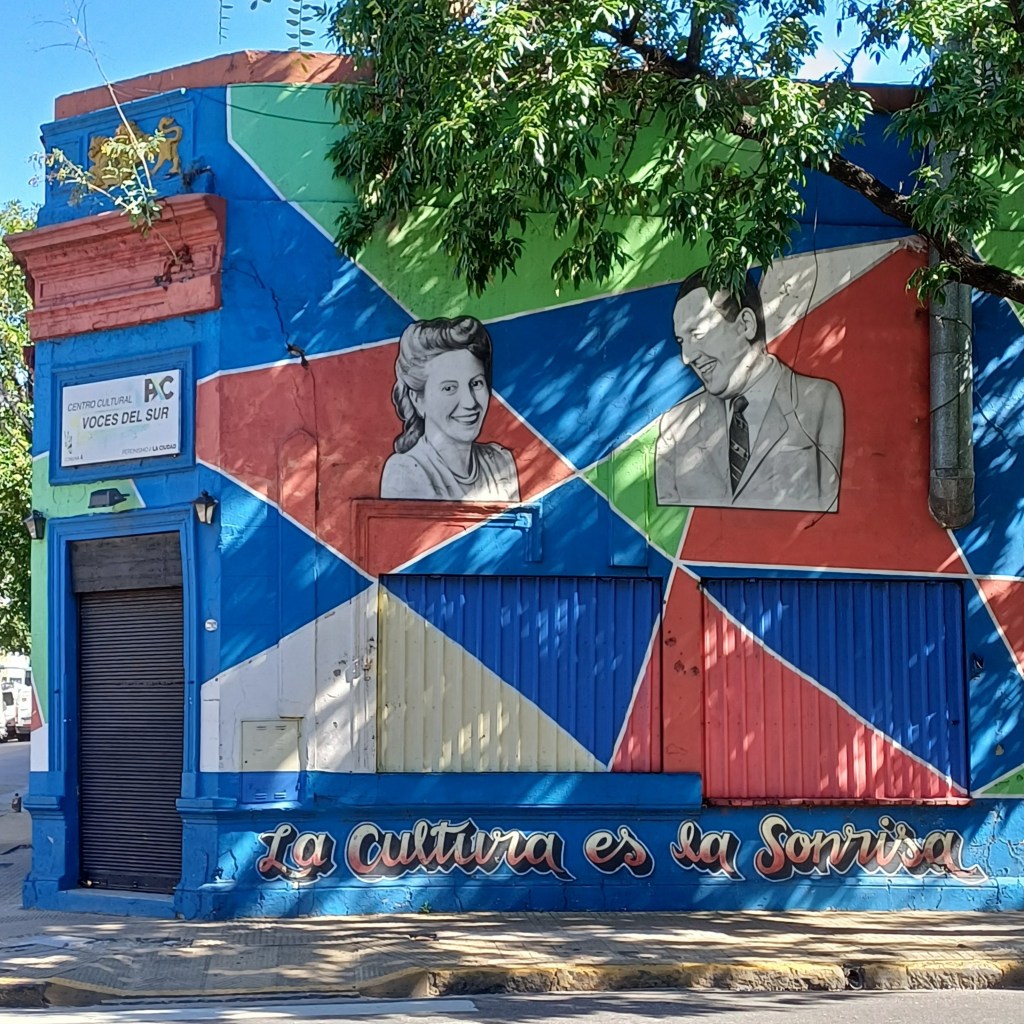
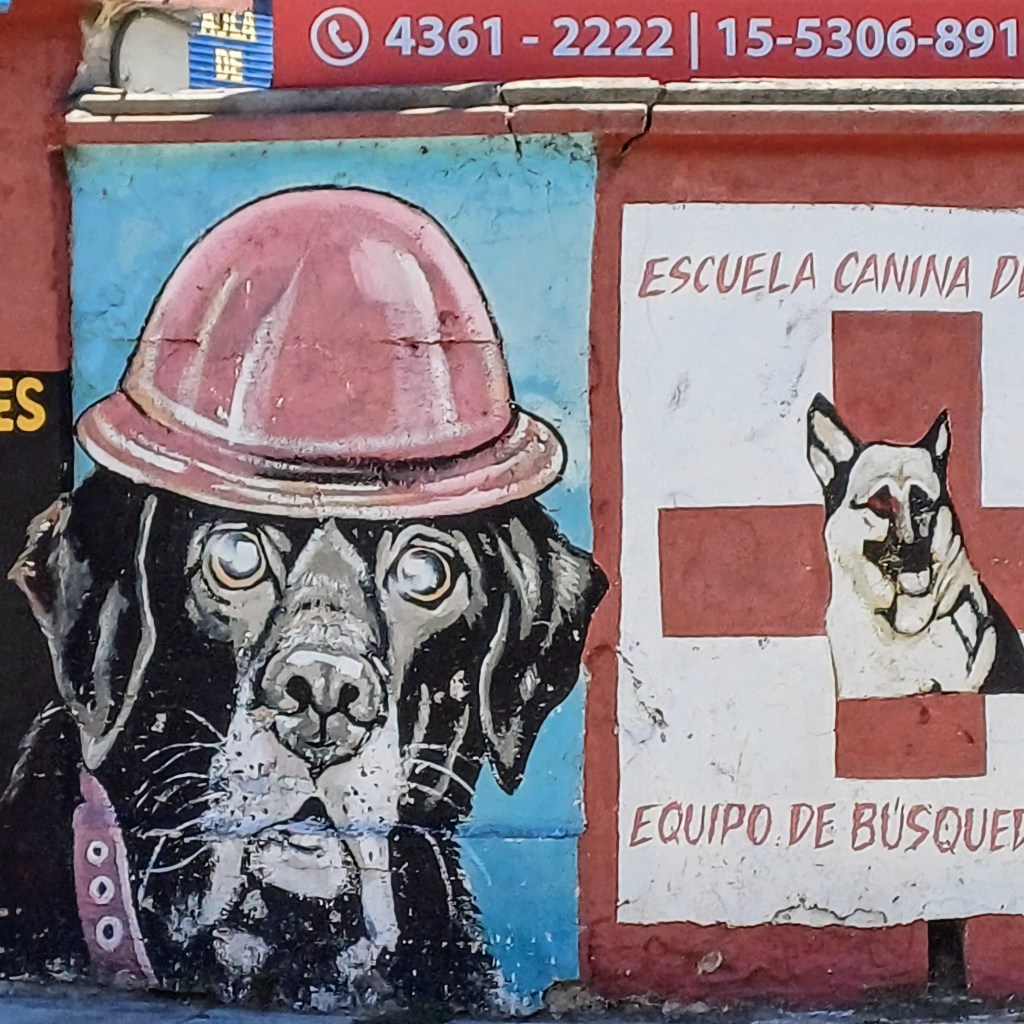
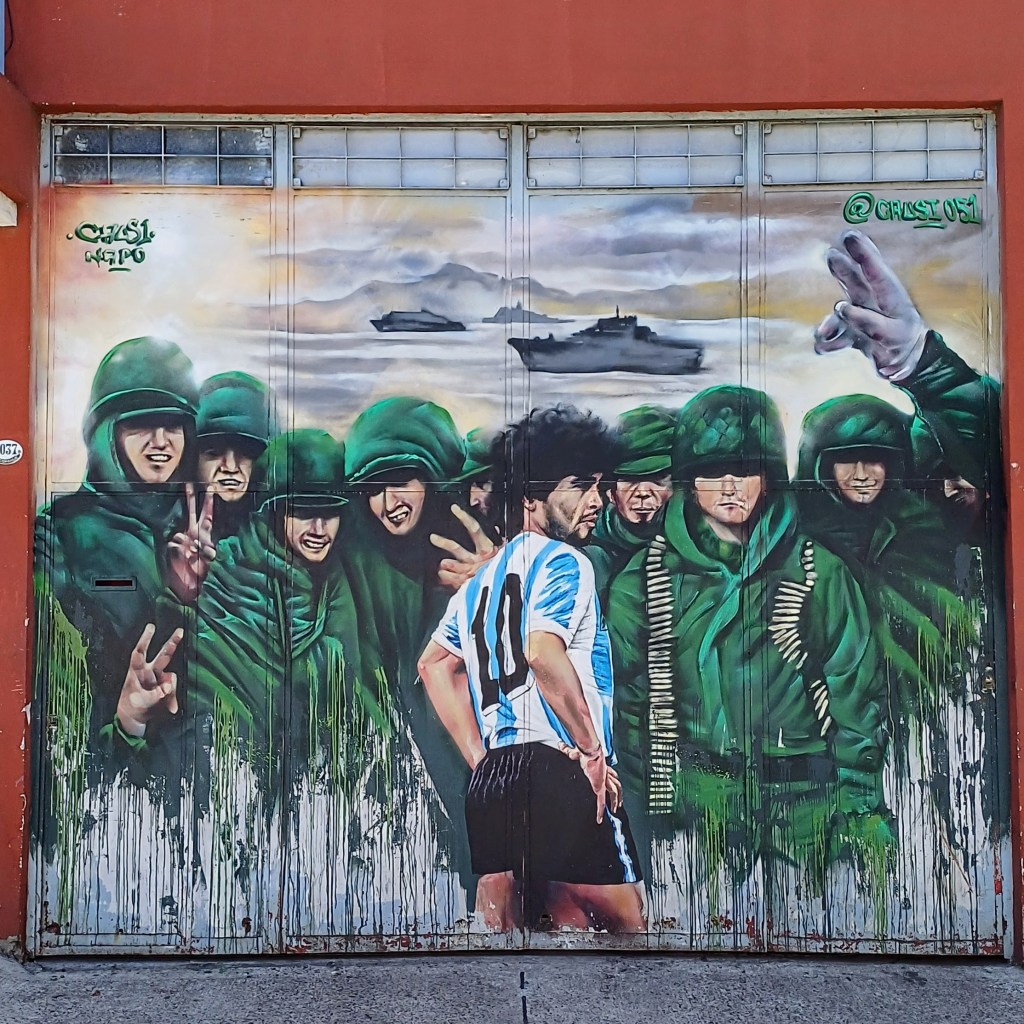
More Barracas.

Practical Stuff.
We found this walk on: https://buenosairesconnect.com/sur-boca-barracas-paseo-recorrido-en-el-dia/
A great resource for quirky and off-the-beaten-track Buenos Aires.
La Flor de Barracas. Suarez 2095 Barracas. Perfect for a leisurely lunch. Good friendly service. OK food. Reasonable price. Go for the atmosphere.
Bar El Progresso. Av. Montes de Oca 1702.
 Wondering Woman
Fascinating place and super colourful photos.
LikeLike
I really appreciate the colour now we are back in the grey and rain!
LikeLike
Another visual and descriptive delight! I was walking there with you every step of the way…..just loved the colours of the houses, and the murals, and the cafe interiors. Thanks Trace for a Sunday outing from the comfort of home!
LikeLike
You are welcome! Funny, we were just thinking yesterday, wouldn’t it be great if you could travel without the actual physical travel part!
LikeLike
Oh, how did I not know about this?! What a fabulous find. I too would have been on a natural high.
Alison
LikeLike
I think maybe BA has changed a fair bit since you were there. Maybe there is more info for tourists, but it’s still a city that hides it’s light under a bushel a bit, I think.
LikeLiked by 1 person
So many rewards when you stroll off the beaten track. Lovely that the cafe owner spent time with you to share my information. Lucky for me that I am getting to see this city via your long stay. One day we may even get to rebook. It’s certainly got that Sth American vibe with all those bright colours.
LikeLiked by 1 person
Hope you do get to go one day, Suzanne!
LikeLiked by 1 person
love a little back story and the district looks fascinating thanks for sharing!
LikeLiked by 1 person