San Telmo is great. But we didn’t come to Buenos Aries only to sit on Plaza Dorrego. Our thoughts turned to getting around the city. The buses – collectivos or bondis in the local parlance – seemed to be the way to go. They are loud, rough around the edges, but reasonably reliable, dirt cheap, and ferry six-and-a-half million passengers a day.
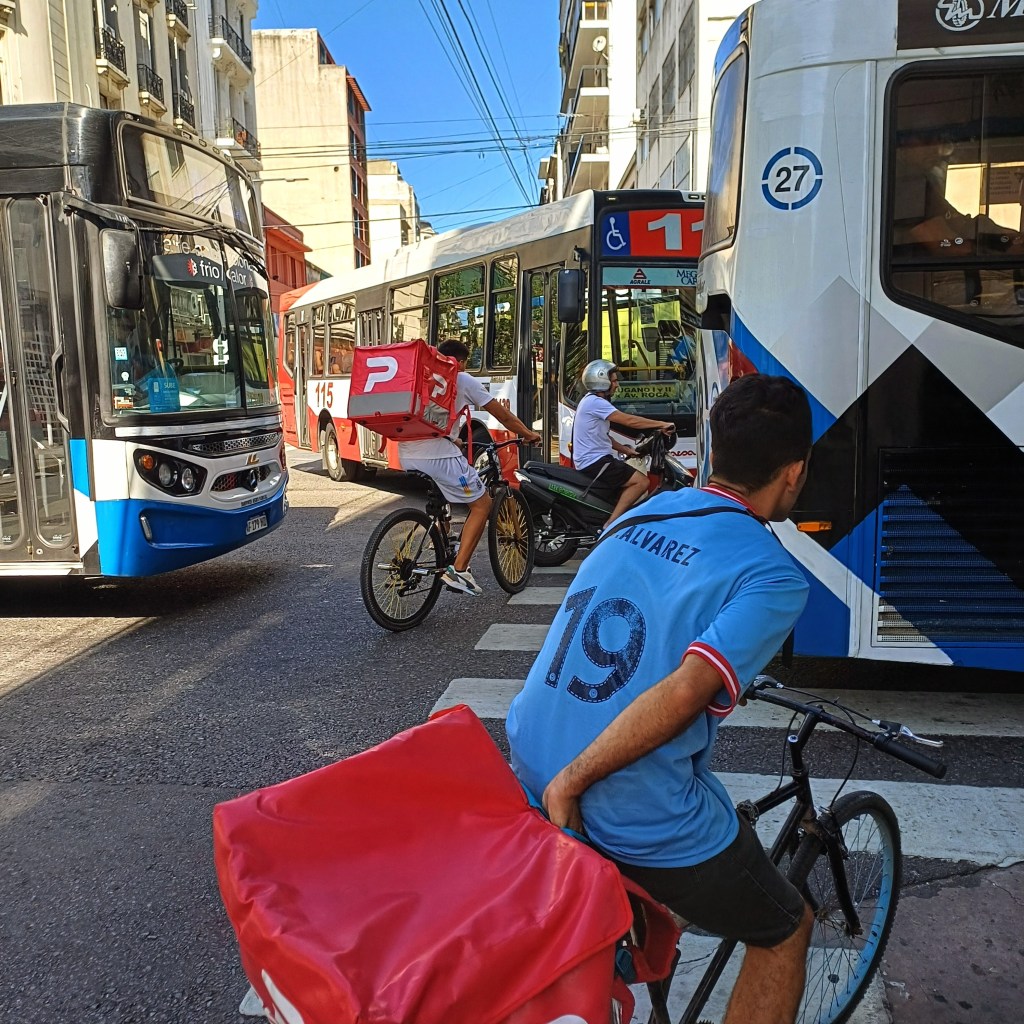
We bought Sube cards at a tourist kiosk but were told we’d still have to go down to the subway to charge them. Luckily there was one just a few steps away. When we got there a grumpy looking man behind a grill greeted us. Well, he stared silently. I explained. Admittedly in poor Spanish. ‘No’, he barked and said something about ‘arriba’. Not really understanding, we dutifully went ‘arriba’, but could only find platforms and punters and not a single other personnel member. Stumped, we went back to the tourist kiosk. They looked as surprised as we felt. The woman, who spoke good English, told us there was another subway a couple of blocks away and suggested we try that. But I asked for the correct way to explain what we needed, and we went back to the guy who seemed to have got out of bed on the wrong side. He had been joined by a bubbly young female colleague and his mood had improved somewhat, or maybe my Spanish just made more sense. At least he understood what we wanted and admitted it was possible. We looked at each other. And waited. ‘I need money’, he gestured impatiently. We gave him 10,000 pesos (about Euro 10) for each card. It was his turn to be flabbergasted. He spoke to his bubbly colleague and her face appeared at the grill. ‘It’s too much’, she said. ‘But we’re going to be here for 3 months’, we told her. ‘It’s too much’, she said, ‘start with 2,000. You can add more when you need to’. We went back past the tourist kiosk and gave them a wave and a big thumbs-up sign. They beamed huge smiles.
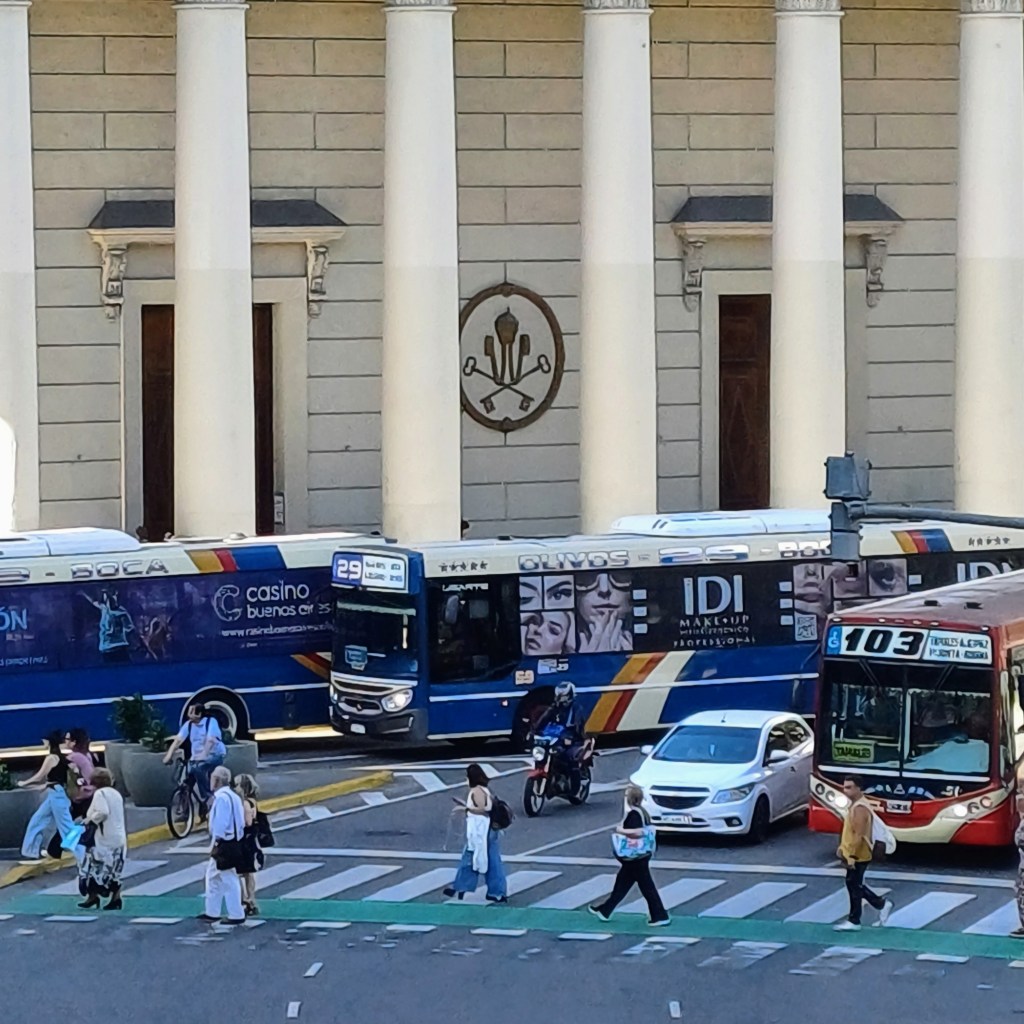
And with that, our adventures on the buses started. According to the Urban Public Transport page, Los Collectivos of Buenos Aires travel the equivalent to 3000 trips around the world each month.
Portenos* queue admirably. They could be British. They are patient. And allow women and old folk to get on first. But once you’ve made it onto the bus, it’s like the Wild West. All of the drivers seem to have inner speed demons. They are the ultimate in cool, with reflective shades and rolled up sleeves, glancing into their mirrors cushioned in quilted, fringed sunshades. I often expected them to take corners on two wheels. Sometimes the bus pulled away while I was still climbing in, the driver impatient to shut the doors and accelerate. ‘There’s an advantage to sitting in these seats’, said Jim one day, who does not travel ‘backwards’ well – ‘when he brakes we’re only slammed back against the seat, and don’t face the danger of being catapulted forward along the aisle’. Another day, a young woman saved me from doing just that, as she gently pushed me into an upright position.
At night it’s even more of a wild ride. Last night we careered along the almost empty Avienda del Libertador at breakneck speed as the driver whistled and bounced up and down on his spring-loaded chair. For good measure he swiped on his phone.

You need to tell the driver your jumping-off point as you get on. He then calculates how much to charge you. I often receive a ‘como?’, a shrug or a puzzled look depending on how the driver interprets my pronunciation. Occasionally they refuse us entry. We never know why, but we do know buses change route without warning. JIm following our journey on Google Map will mumble ‘he’s gone off-piste’. Mostly we sit tight, and hope for the best. A bus journey needs time and can be exhausting.
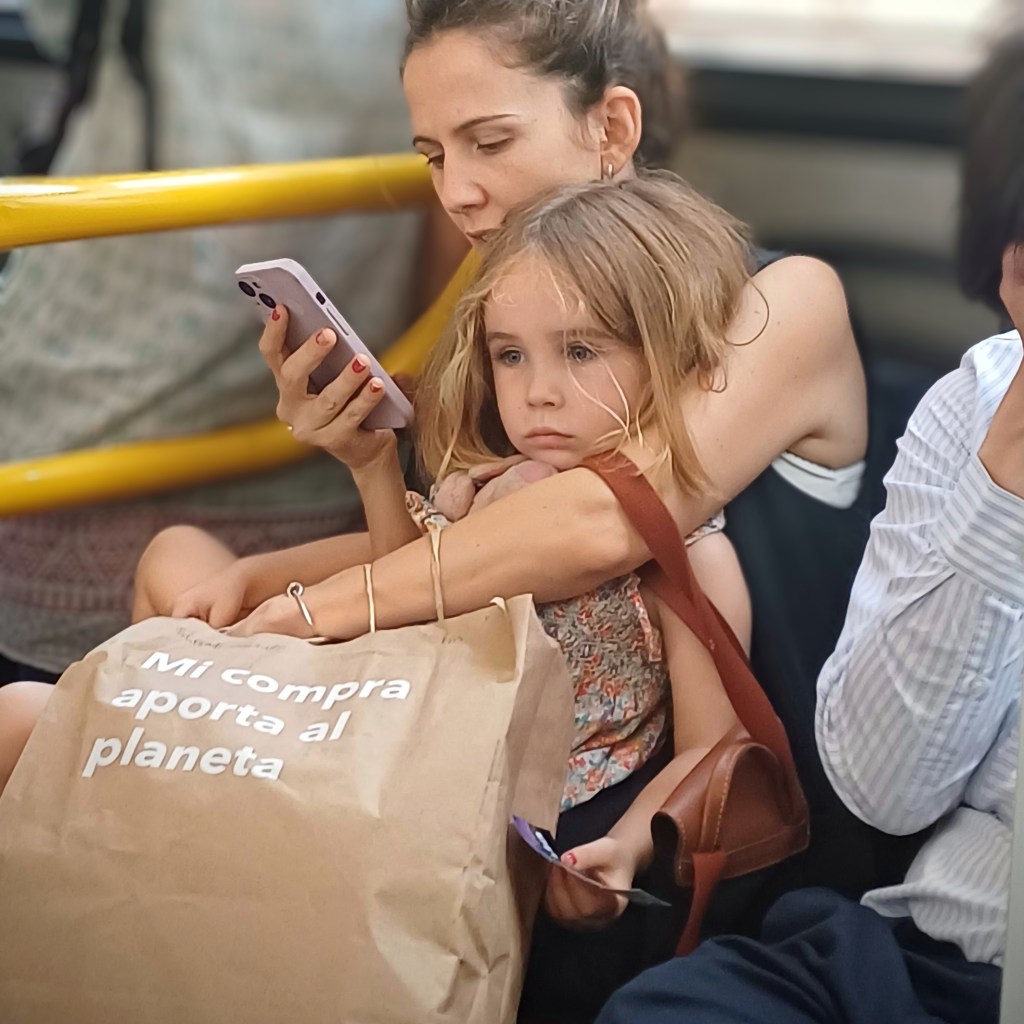
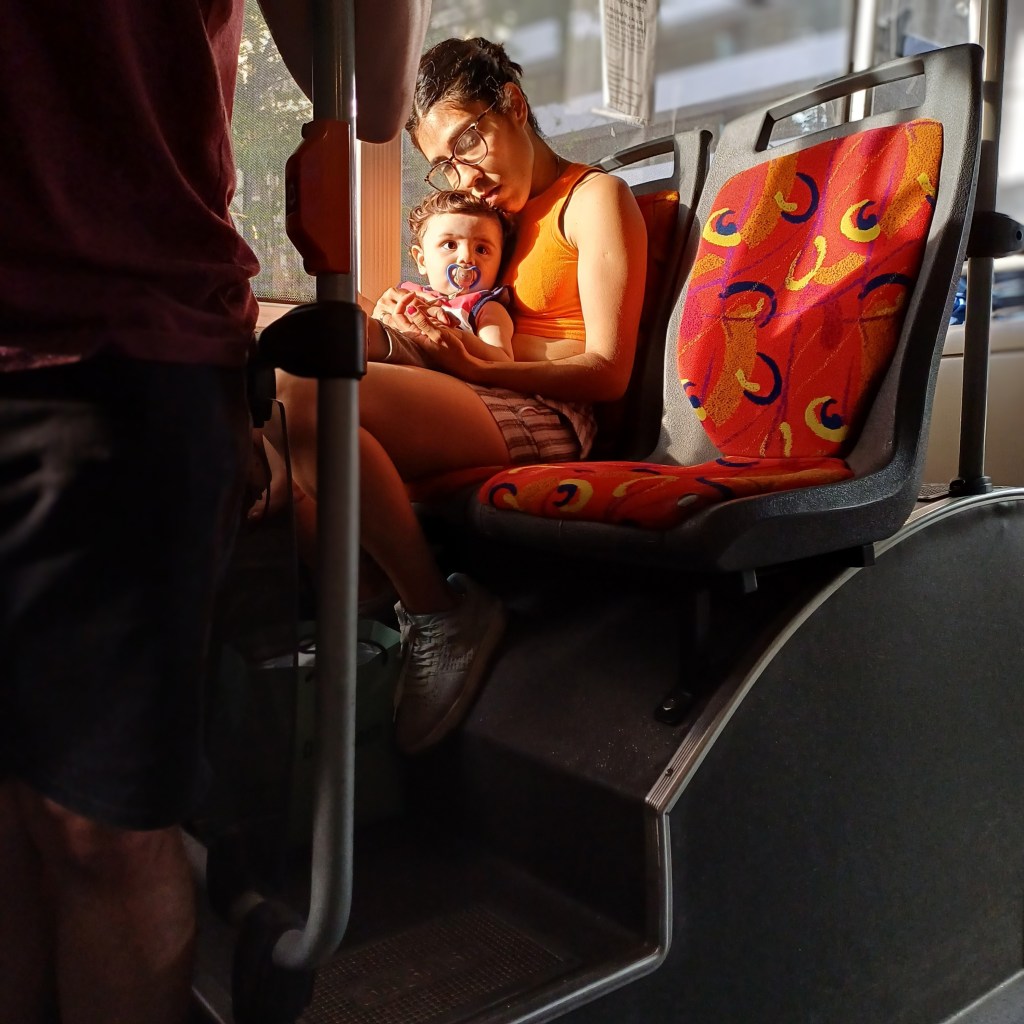
But the rewards are great. This is local life par excellence – both in and outside the bus. Street-scapes roll past from a ringside seat, no effort required . That’s how we discovered Liberdad – the street where every shop is a jewellers, and Lavalle – miles of material, and ribbons and balloons, and shops selling mannequins, and Plaza Dr Bermardo Houssay, the patch of park space around the medical department of the university. We save nuggets like these for little walking trips later.
Sometimes I have little conversations on the bus. More exchange of glances than conversations, of the ‘thank goodness, I’ve finally got a seat variety’ but once I spoke to a Canadian lad, who’d arrived here to work and had been fired the next day. He was trying to figure out his next move but seemed remarkably cheerful in the face of it all.
Recently the lines for the buses have become longer and fares have doubled – as Milei cuts subsidies to bus companies, and they cut the number of buses on the road. Everyone remains good tempered.
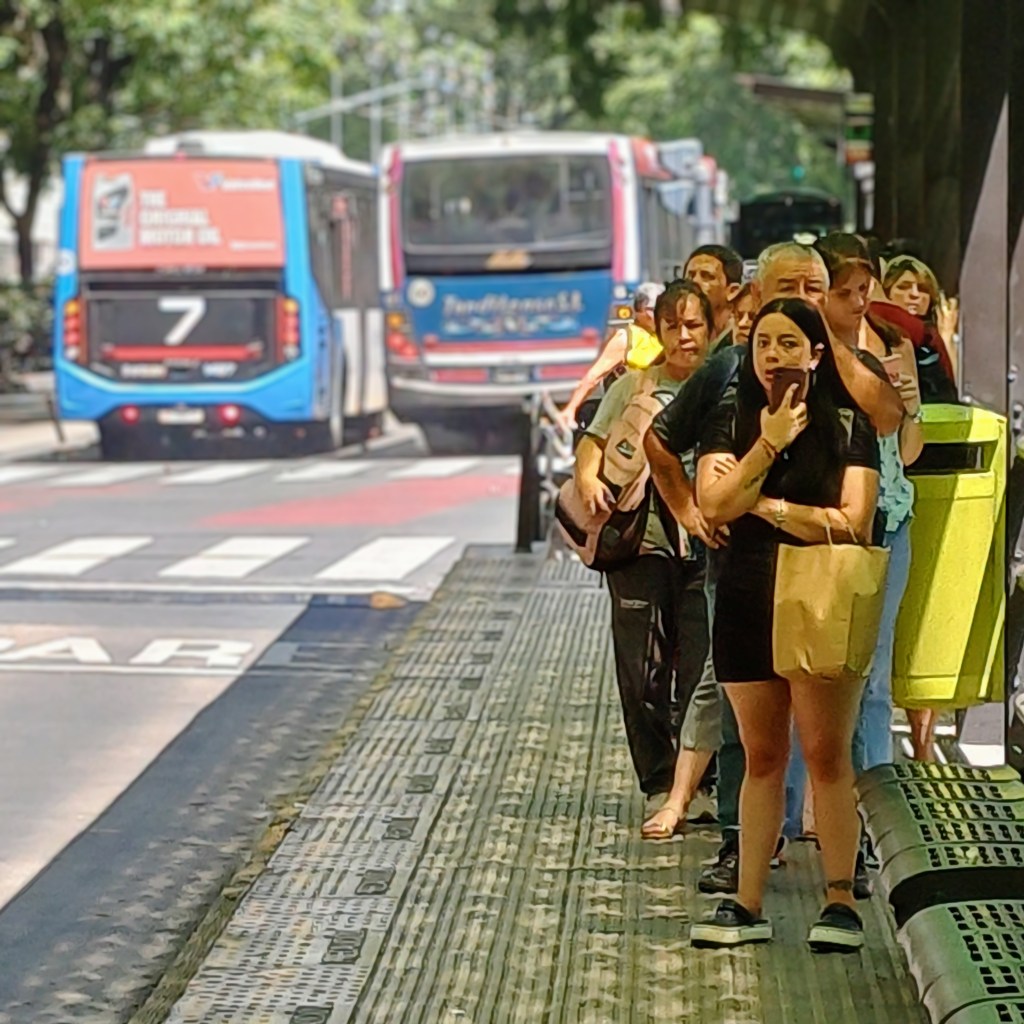
Buses are still the way to go.
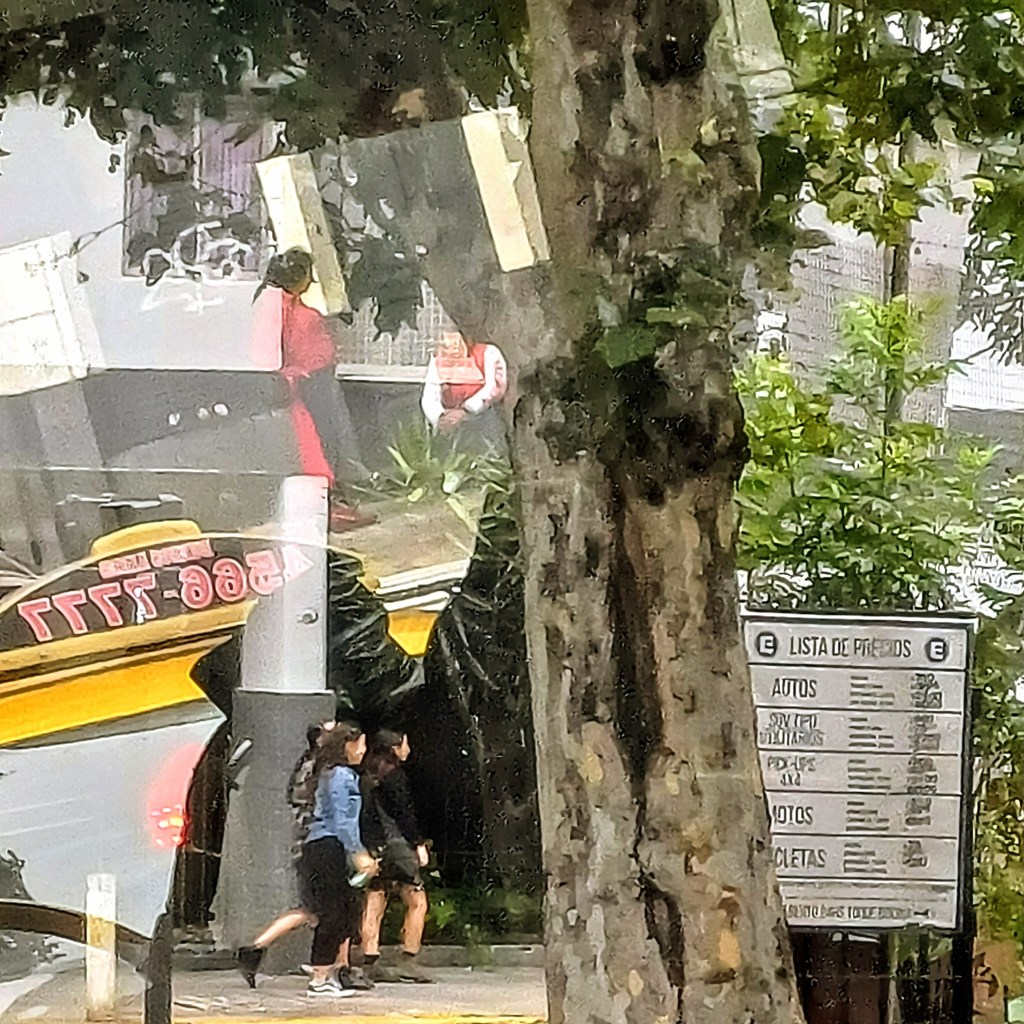
* People of Buenos Aires call themselves Portenos, ‘inhabitants of the port’.
Practical Stuff.
See https://wander-argentina.com/how-to-take-a-bus-in-buenos-aires/ for good practical information on how to take the bus in Buenos Aries.
 Wondering Woman
Brave!
LikeLike
We love it! But just lately there has been a lot more standing, which isn’t quite so much fun!
LikeLike
Love this…..fab photos too!
LikeLike
I love, that when you travel, something as mundane as taking the bus, becomes quite an adventure!
LikeLiked by 1 person
Hi Tracey. Exciting stuff. Feels like you are getting under the skin of the city which is exactly what you wanted.
MJ
LikeLike
In our last month now, and we do feel like we’re finding a few things that aren’t typical tourist stuff which is indeed what I really love.
LikeLiked by 1 person
Oh this sounds way more wild than our experience (from what I remember – it was a long time ago), tho we didn’t do that many bus rides. I love both photos of the people on the bus, and of the line of people waiting.
Alison
LikeLiked by 1 person
Maybe we are just taking the ‘wrong’ buses!
LikeLiked by 1 person
What a better way to get into Portenos’ shoes😊
LikeLike
Maybe stay up until 2 or 3am, but I can’t manage that!
LikeLiked by 1 person
hehe, really?..
LikeLike