We’ve just set off on our first far-away adventure since Covid struck. Rather perversely my thoughts turn to our last big trip, to Vietnam. I somehow didn’t have the heart write about it then. Now I do. So while I gather my thoughts about Madrid, and as we move on to Buenos Aries, I look back on Hanoi with so many good memories. I cannot say that the information in the practical stuff still holds. But I leave it there – just in case.
Hue, Vietnam February 2020
A popular Vietnamese slogan runs: ‘Vietnam isn’t a war, it’s a country’. We visited Hue (pronounced whey) to wander amongst the tombs, lakes and chapels of the country’s last ruling dynasty. Mausoleums designed by the emperors themselves; buildings that reflect personality and priorities and a period of Vietnamese history including unification, military conquest and the cultural impact of French colonialism.
The tombs scattered on either side of the wonderfully named Perfume River are glorious.
Emperor Minh Mang (1820-1840*) ruled a large stable empire that stretched across present day Vietnam into Cambodia and Laos. He banned foreign missionaries, crushed rebellions and resisted the growing European threat. His tomb laid out in formal Chinese style, stately, refined and balanced, echoes his reign. Set amidst pine trees and large, lotus filled lakes, it’s a harmonious, peaceful place.
Tu Doc’s mausoleum is more pleasure palace than final resting place, a marriage of water and woods. He reigned for thirty six years (1848-83) – the longest of any of the Nguyen kings – but this was a prize gained with the murder of his own brother. Tu Doc ruled a weakened Vietnam, at a time when the French strengthened their colonial grip. Rather than engage in a losing battle he retreated into constructing and enjoying his tomb, spending his free time composing and reciting poetry in the Luu Khiem Lake pavilions; surrounded by his wives and concubines of which he had 104. He was never blessed with children. Still a gorgeously peaceful spot, the quiet disturbed only by the plopping of very large carp, and the unceasing babble of a man on his mobile phone.
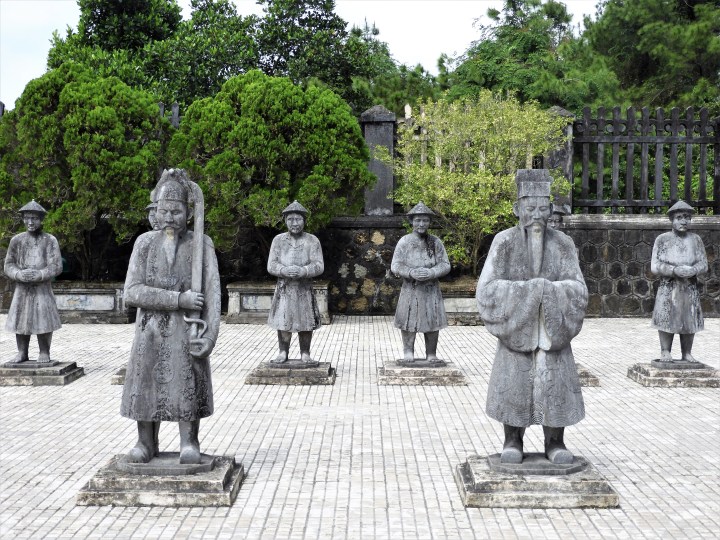
We strolled from to temple to pavilion to chamber before reaching the Honour Courtyard. A guard of elephants, horses and tiny mandarins even shorter than the emperor himself (Tu Doc was only 153 cm tall) guarding the twenty ton stone tablet containing Tu Doc’s biography. Tu Doc of course, composed this himself.
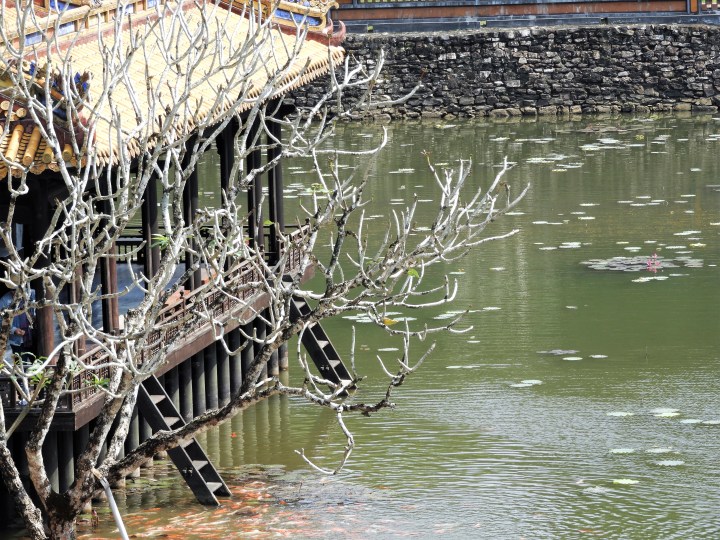
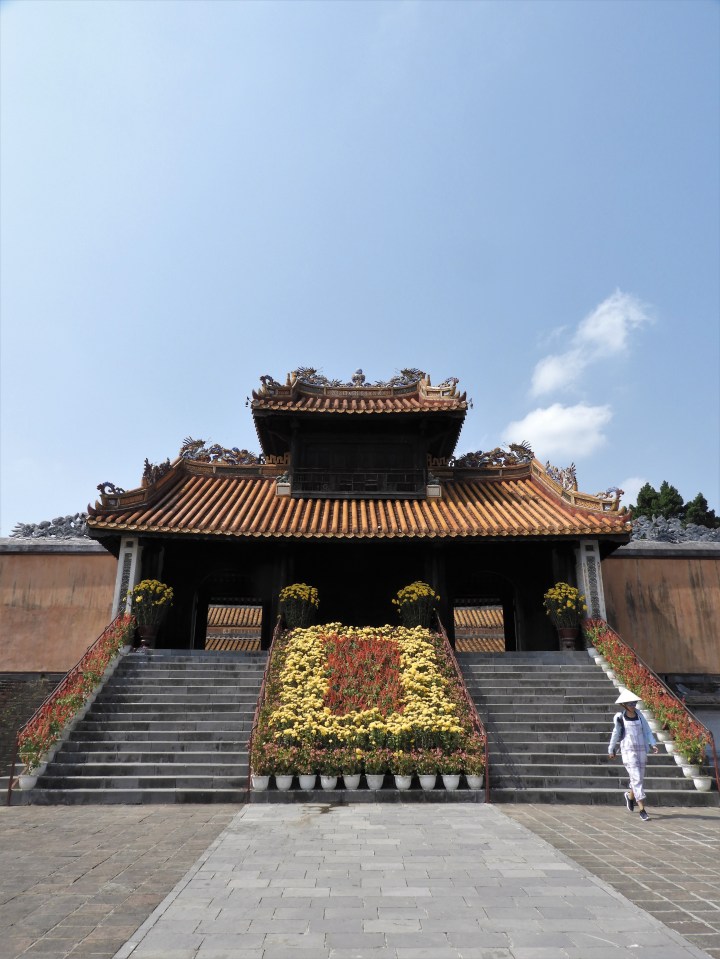
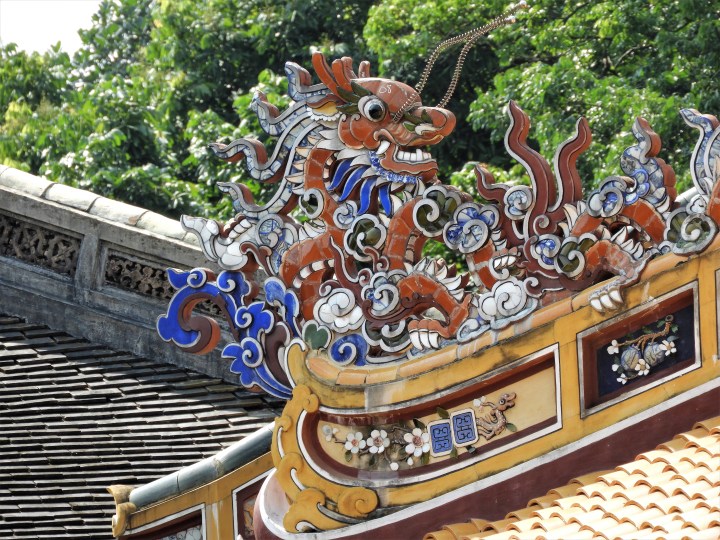
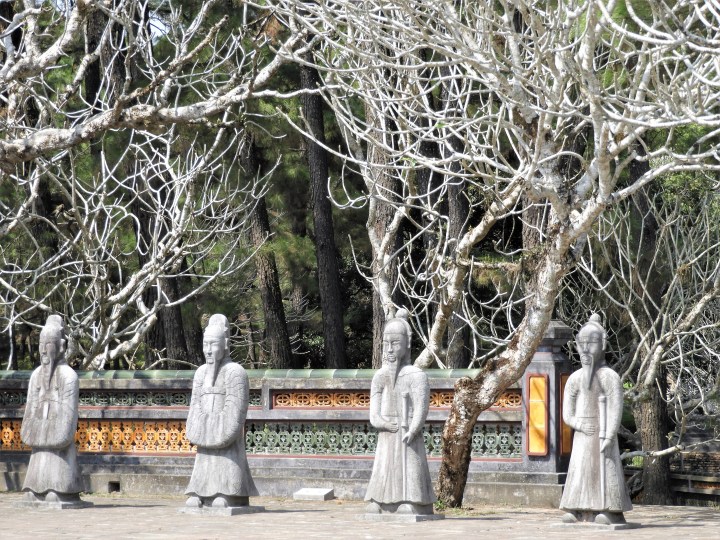
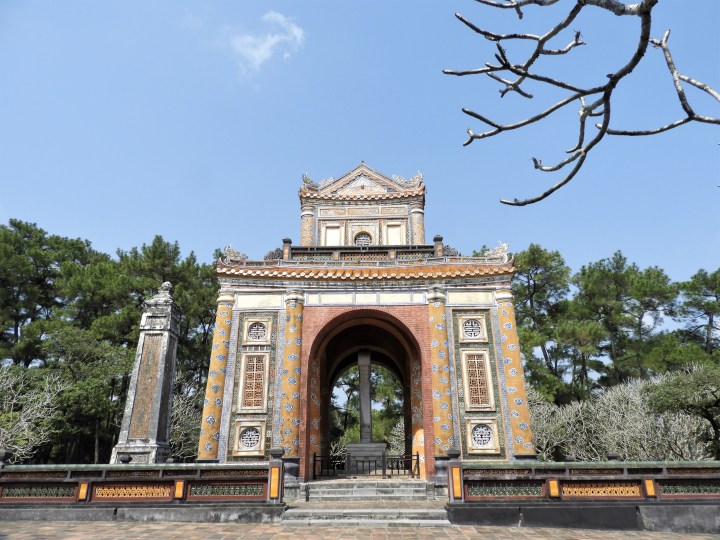
Tu Doc enjoyed his mausoleum during his lifetime but was never buried there. His remains together with great treasure lie in an unknown spot. To keep it a secret from grave robbers, all two hundred of the servants who buried him were beheaded. This in 1883! Many of his concubines were forced to live in his tomb, the Mausoleum of Modesty, after his death, to take care of rites of worship and offerings.
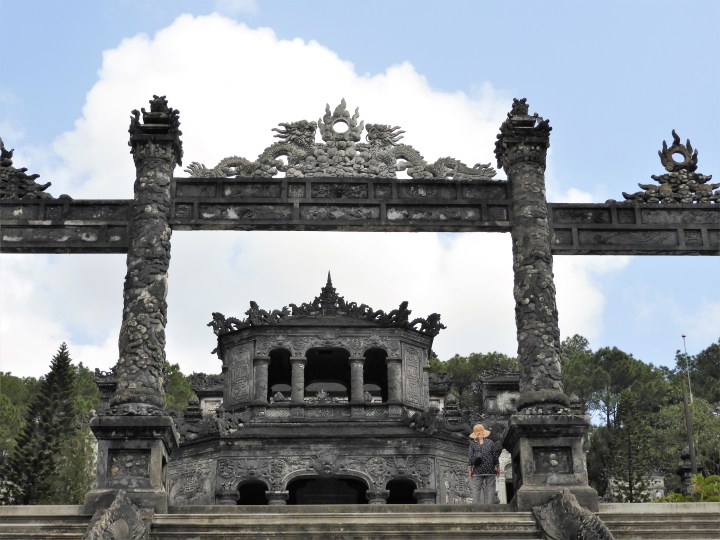
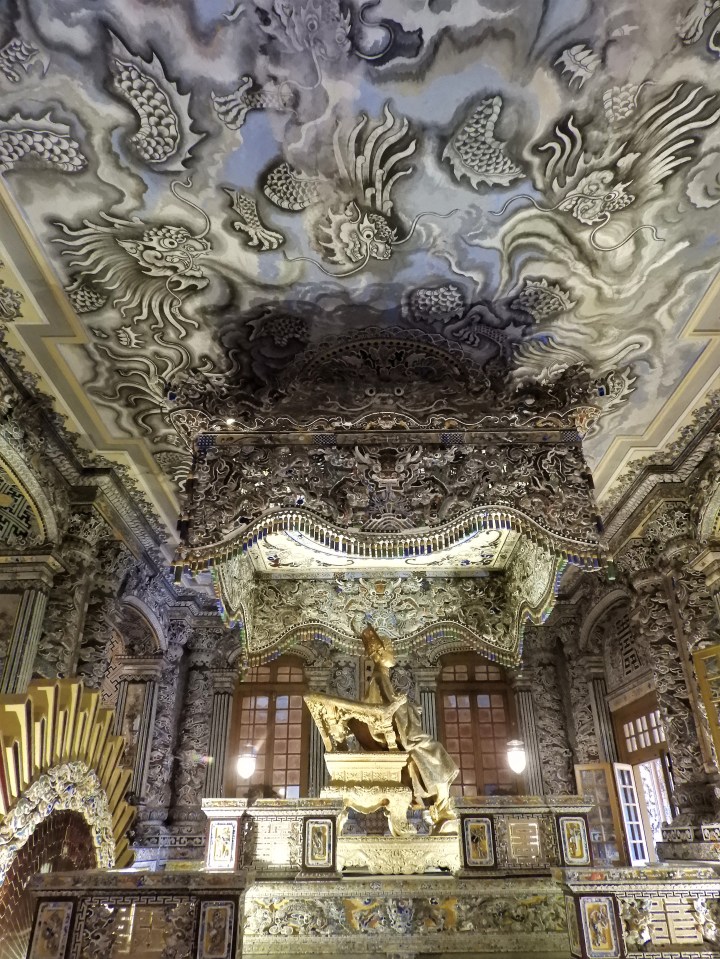
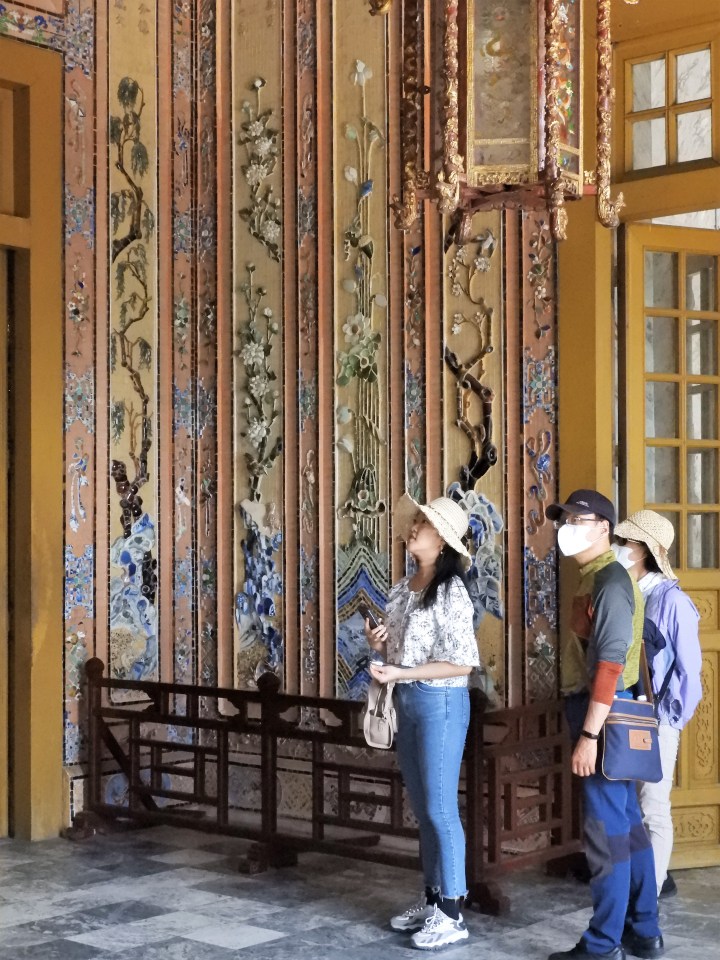
Emperor Khai Dinh (1916-1925) embraced French colonialism, favoured imported luxuries, spent huge sums of money on his tomb and was hugely unpopular. His mausoleum is like no other, quirky beyond belief. A series of steps climb a pine covered hill. Chinese, Vietnamese, French and Cambodian architectural influences jostle for attention. Composed of concrete (now blackened) the exterior is stark, grimy and daunting. The inside is a mass of colourful ceramic mosaics and swirling dragons, while a golden effigy of the Emperor sits on his throne under a canopy decorated with glass and pottery shards. Khai Dinh’s is a tomb that looks back to the country’s Chinese past and welcomes it’s French future.
*Dates given by each emperor are periods that they ruled, not when they lived.
 Wondering Woman
Very interesting and looking forward to the present adventure! Val
LikeLike
Amazing information and photos! Thanks for sharing. ❤️🌈
LikeLike
looks brilliant! I think I visited these back in the day (2011) as part of a boat cruise… does that sound right?
LikeLike
Could be!
LikeLike